Adirondack history Field Guide hero image

Field Guide

How the Adirondacks Became Forever Wild

People, Wilderness, and the Making of the Park

A timeline story of homeland, wilderness, mapping, extraction, protection, exploration, and inheritance.

Why this history matters

The Adirondack Park is not wild by accident.

This place was known, traveled, sold, surveyed, damaged, defended, protected, climbed, loved, and inherited. To understand the Park is to understand why Forever Wild still matters.

Indigenous Adirondack homeland and waterway history

Before the Park

Before the Park had a name.

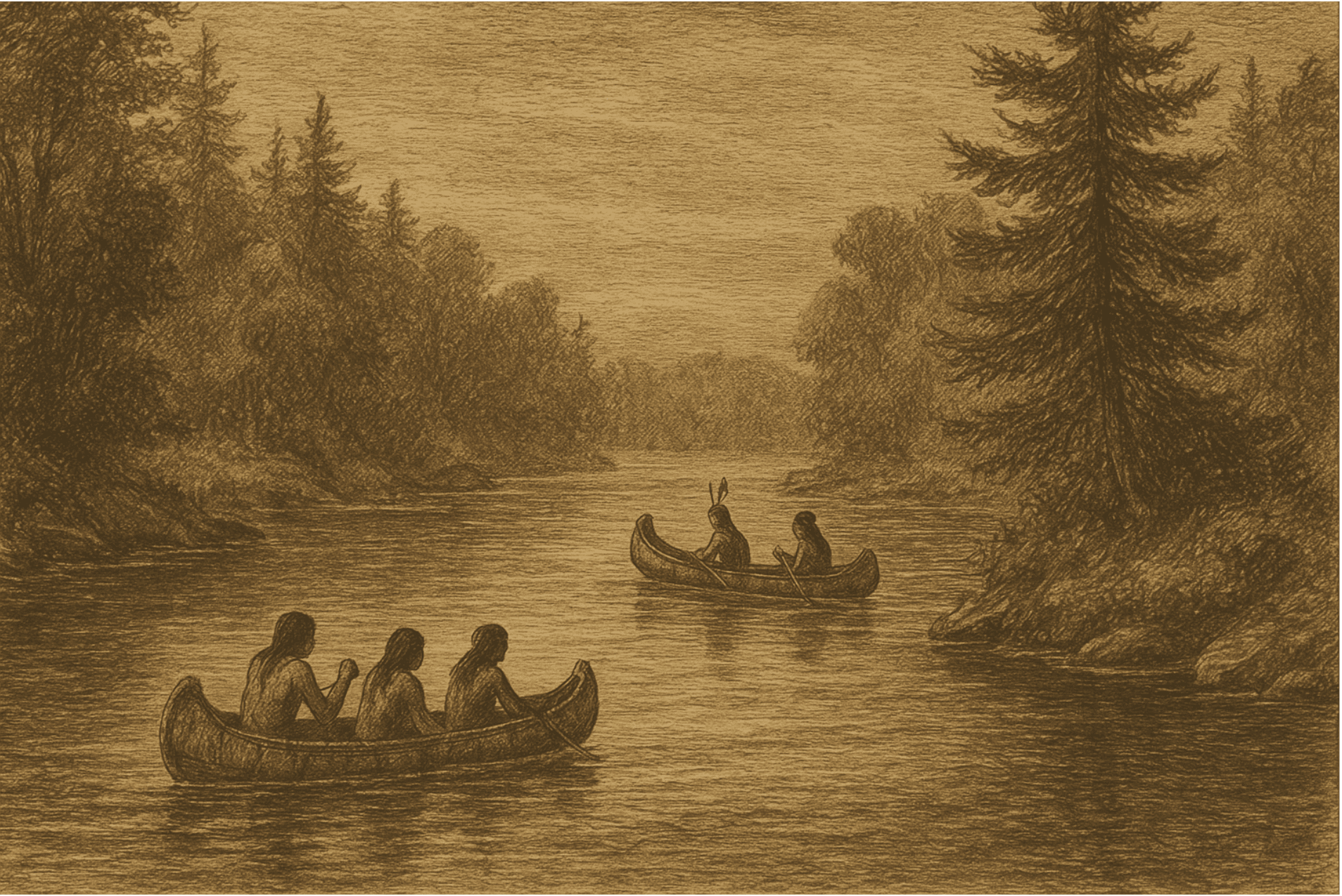
Long before the Adirondack Park existed, this region was part of Indigenous homelands, travel routes, hunting grounds, waterways, and seasonal lifeways. The mountains, lakes, and rivers were known through movement, use, story, and relationship before they were ever bounded by a blue line on a state map.

Abenaki, Mohawk, Haudenosaunee, Mahican, and other Indigenous connections belong at the beginning of the Adirondack story. The region should not be presented as empty wilderness waiting to be discovered. It was a lived and traveled landscape before it became a park, a preserve, or a hiking destination.

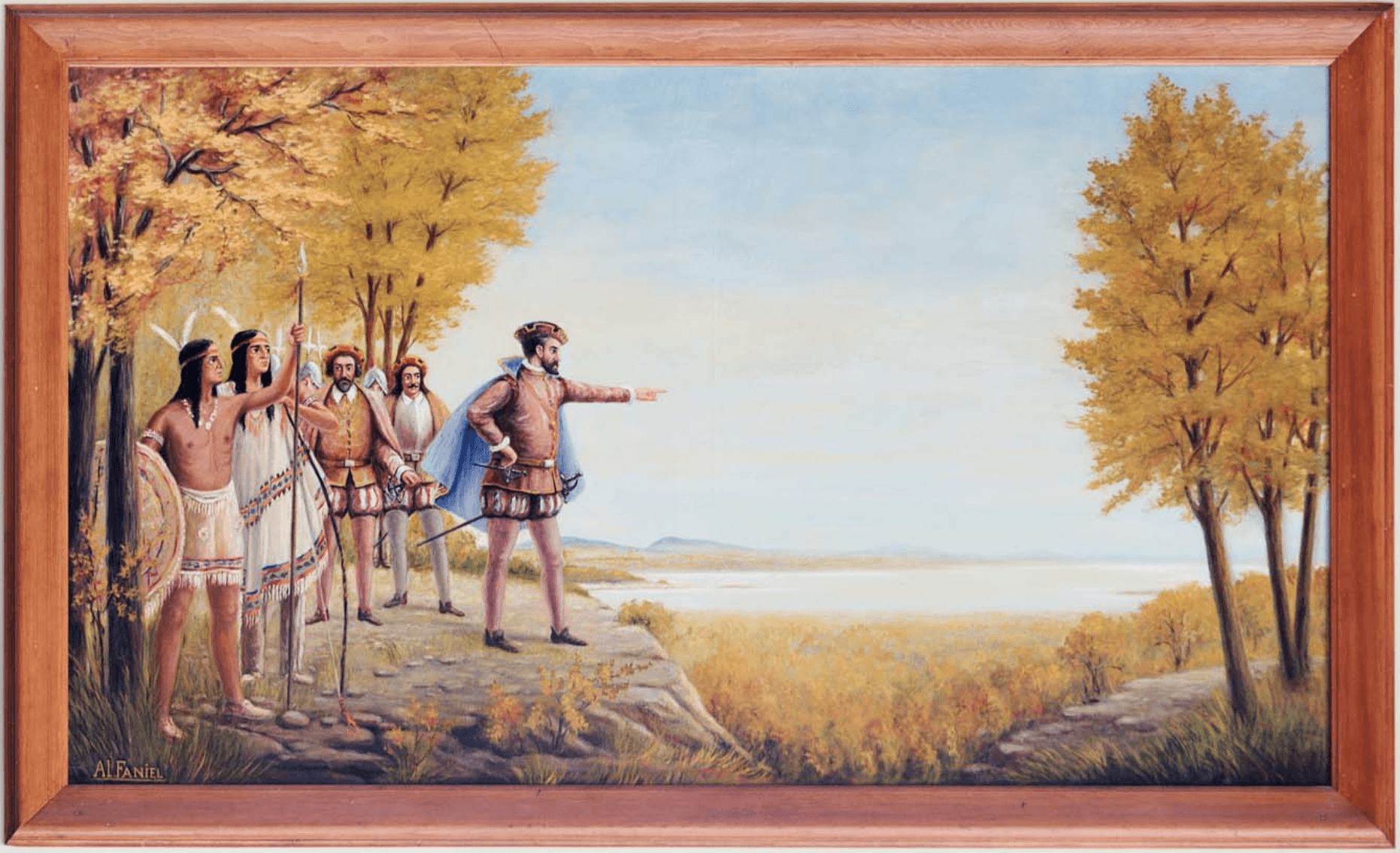
Jacques Cartier on Mount Royal looking south toward the Adirondack mountain country

European Contact

Cartier looks south from Mount Royal.

In 1535, Jacques Cartier reached the Iroquoian village of Hochelaga and was led to the summit of the mountain he named Mount Royal. From that height, he wrote of a wide view stretching far across the surrounding country.

The Adirondacks were not yet named on European maps, and Cartier did not describe them with the language we use now. But from Mount Royal, the southern mountain country beyond the St. Lawrence and toward the future Adirondack region belonged to the first European edge of the larger story.

Adirondack name origin and early map history

The Word Adirondack

How the word Adirondack entered the story.

The word Adirondack is generally traced to a Mohawk term often translated as bark eater or tree eater. That meaning matters because it was not originally a romantic mountain name.

It was used as a derogatory name for neighboring Algonquian-speaking peoples, including the Abenaki, describing people who, in harsh winter conditions, were said to eat the inner bark of trees when food was scarce.

Over time, European writers, missionaries, mapmakers, surveyors, and geologists carried the word forward in changing spellings and meanings. What began as an Indigenous-language insult eventually became attached to the mountains, then to the Park itself.

Early Adirondack wilderness frontier history

A Harsh Frontier

A wilderness too hard to tame.

To many Europeans and early settlers, the Adirondacks appeared cold, rugged, wet, remote, and difficult to farm. The growing season was short. The soils were thin. The terrain was broken by swamps, rivers, steep slopes, lakes, and dense forest.

This was not empty land, but it was land that resisted easy conversion into the familiar patterns of settlement, agriculture, and profit. Its difficulty shaped the pace of development and helped preserve large areas longer than more accessible regions.

Adirondack land purchases and speculation history

Land Sold on Paper

The wilderness was divided before it was understood.

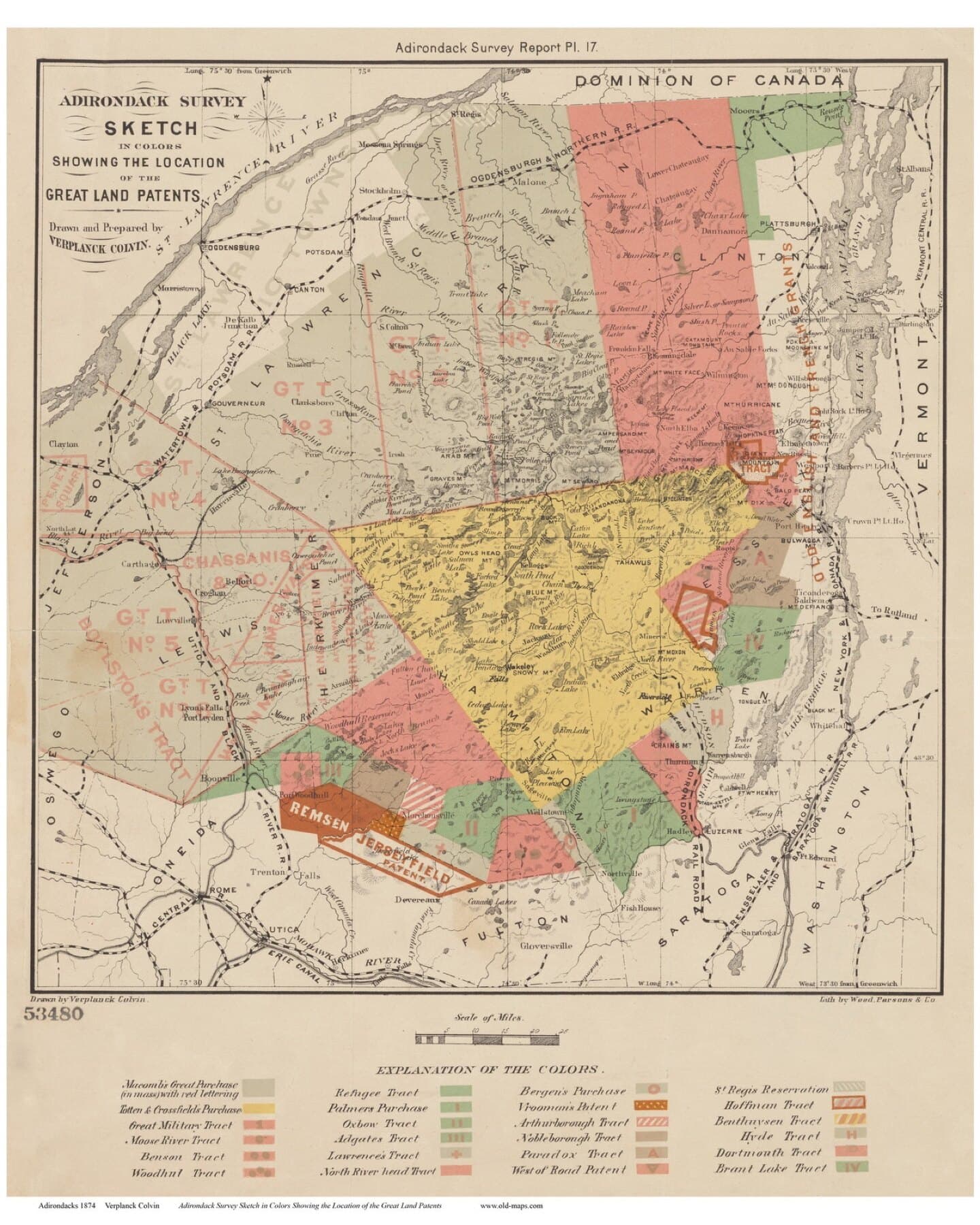
Large land deals such as the Totten and Crossfield Purchase, Macomb Purchase, and Old Military Tract treated the Adirondacks as territory to divide, sell, settle, and extract from. On paper, the region could be measured into claims, lots, and speculative opportunity.

On the ground, the reality was far more stubborn. Mountains, wetlands, distance, poor soils, cold weather, and difficult transportation kept many ambitions from becoming permanent settlement.

First recorded High Peak ascent on Giant Mountain

First Recorded High Peak

A survey party climbs Giant.

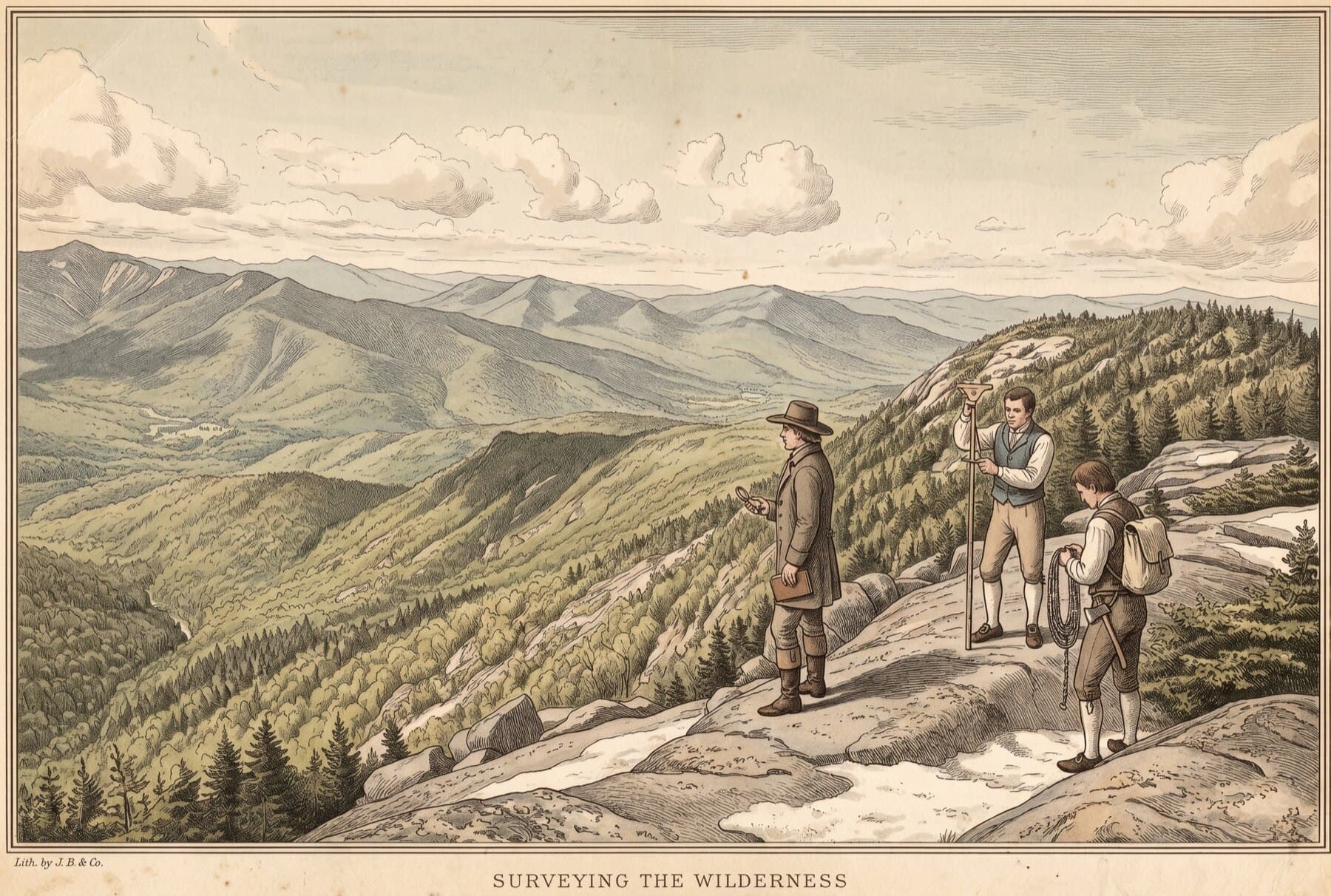
On June 2, 1797, Charles C. Brodhead and his survey crew reached the area near Giant Mountain’s summit with two feet of snow around them… in June. That climb is often treated as the first recorded ascent of an Adirondack High Peak, though unofficial ascents may have happened earlier.

Brodhead was not climbing for recreation. His crew was marking the southern line of the Old Military Tract, entering the mountains from the east and pushing a survey line west across difficult country.

That work eventually carried the party near present-day Tabletop, over the MacIntyre Range, and toward Tupper Lake. Another account describes the line as roughly forty miles from Elizabethtown to Tupper Lake, crossing nearly 17,000 vertical feet and passing over Giant and present-day Boundary Peak.

Ebenezer Emmons naming the Adirondack Mountains and Mount Marcy

The Mountains Receive a Name

Emmons, Marcy, and the Adirondack Mountains.

In 1837, a New York State survey party including William Redfield and Ebenezer Emmons made the first documented ascent of Mount Marcy. Redfield had called it the High Peak of Essex before Emmons attached the name Marcy, honoring Governor William L. Marcy.

Emmons was leading the Geological Survey of New York State and was tasked with studying the state’s northern wilderness. He also selected Adirondack as a name for the specific group of High Peaks around Marcy before the name expanded to the larger region.

This period gave public language to mountains that had long existed outside most written maps and popular awareness. Emmons also named Dix in 1837. The work was not only about summits; it was about turning the high country into measured, named, scientific New York geography.

Verplanck Colvin Adirondack survey and Lake Tear of the Clouds

Measured, Mapped, and Defended

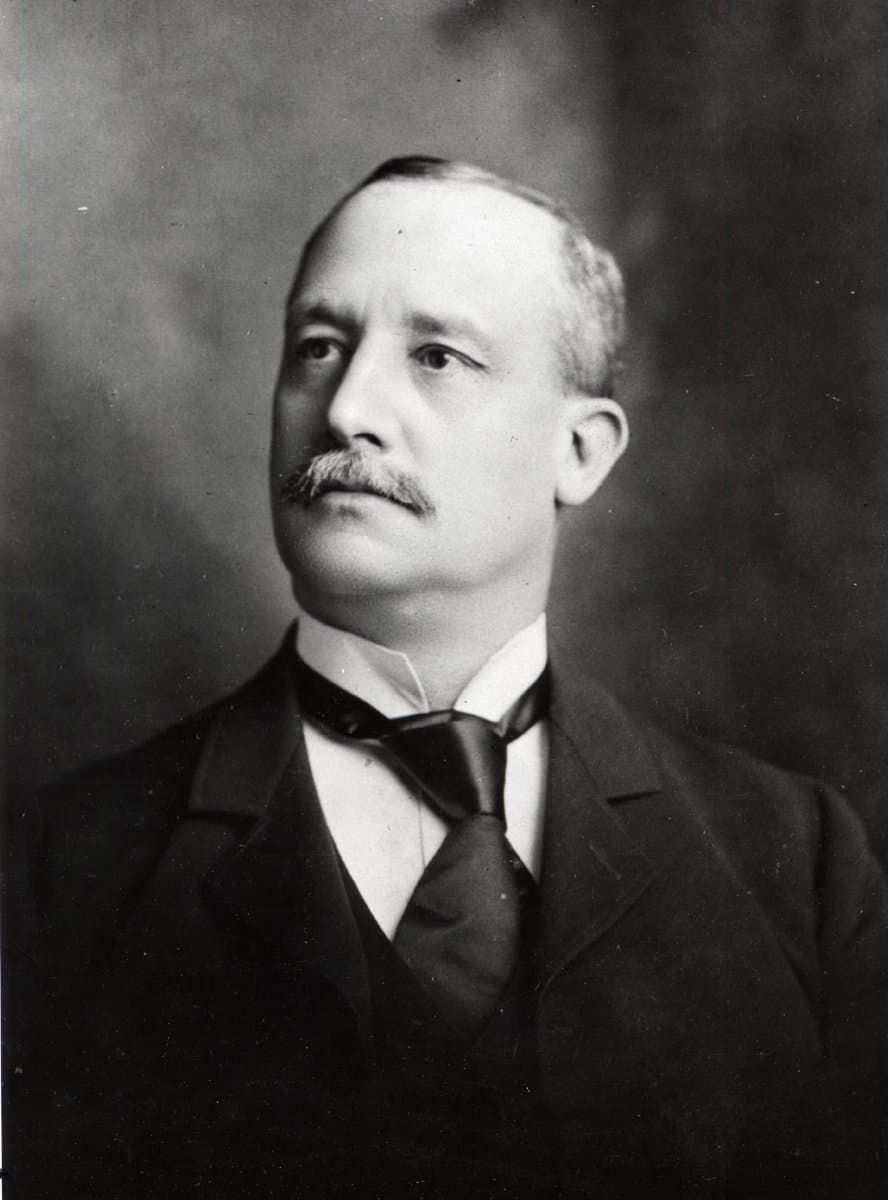
Verplanck Colvin saw more than mountains.

Verplanck Colvin’s surveys helped measure the Adirondacks, but his importance was larger than numbers. During an 1870 ascent of Seward, he saw the damage being done by lumbering and became convinced the forests needed protection.

In 1873, Colvin and his team surveyed Mount Marcy by extending a line of measurements from Lake Champlain to the summit. His final calculation placed Marcy at 5,344.311 feet, within about three inches of today’s most accurate surveys.

Colvin’s work tied the mountains to water, forests, rivers, canals, timber, climate, and public need. His maps and reports helped shift the Adirondacks from remote interior to a landscape the state could see, measure, and argue to protect.

Forest Preserve and Adirondack Park Blue Line history

Forest Preserve and Park

Protection begins to take legal form.

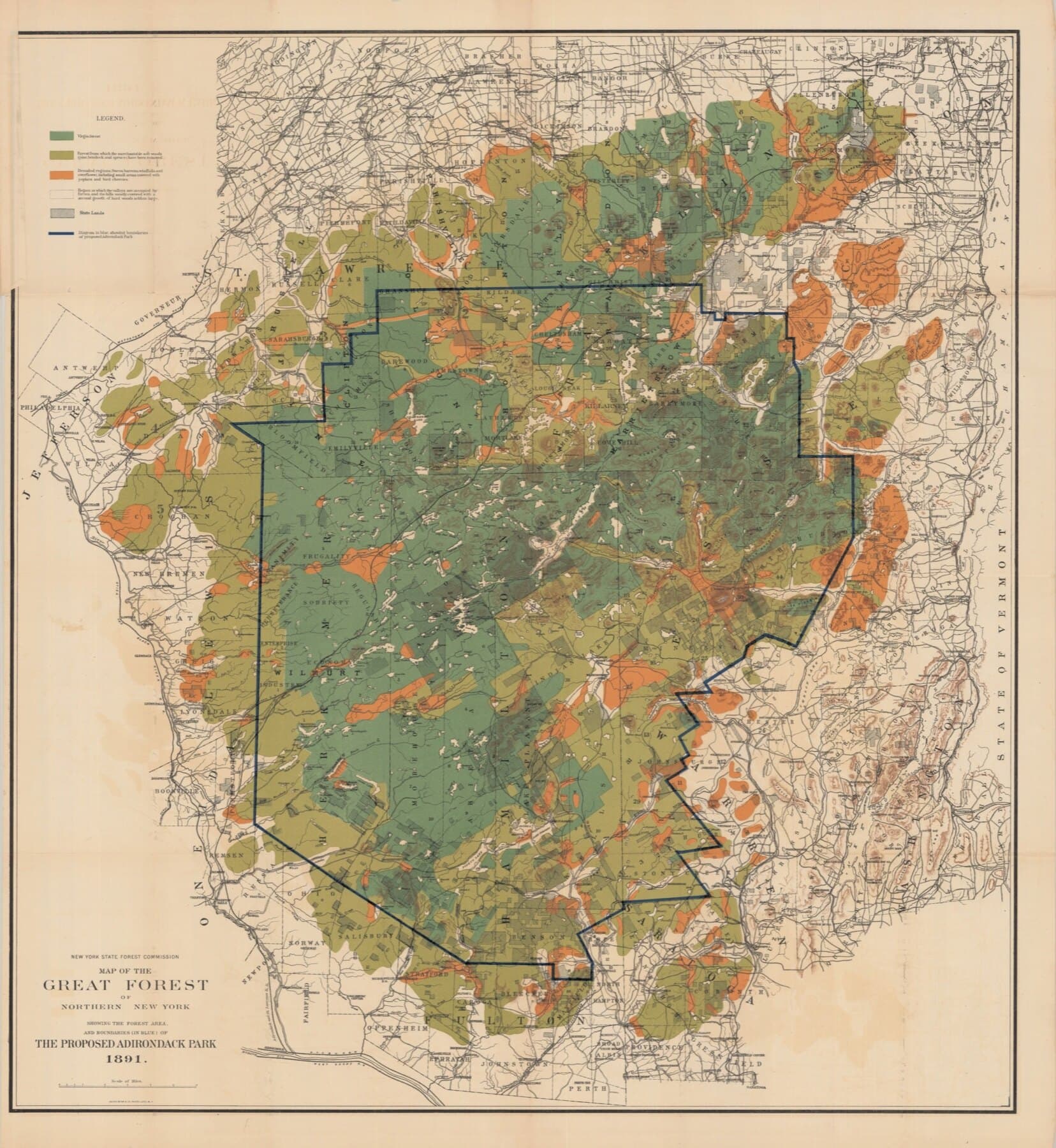
In 1885, New York created the Forest Preserve. In 1892, the Adirondack Park was created around the idea that the region’s forests, waters, and public value needed lasting protection.

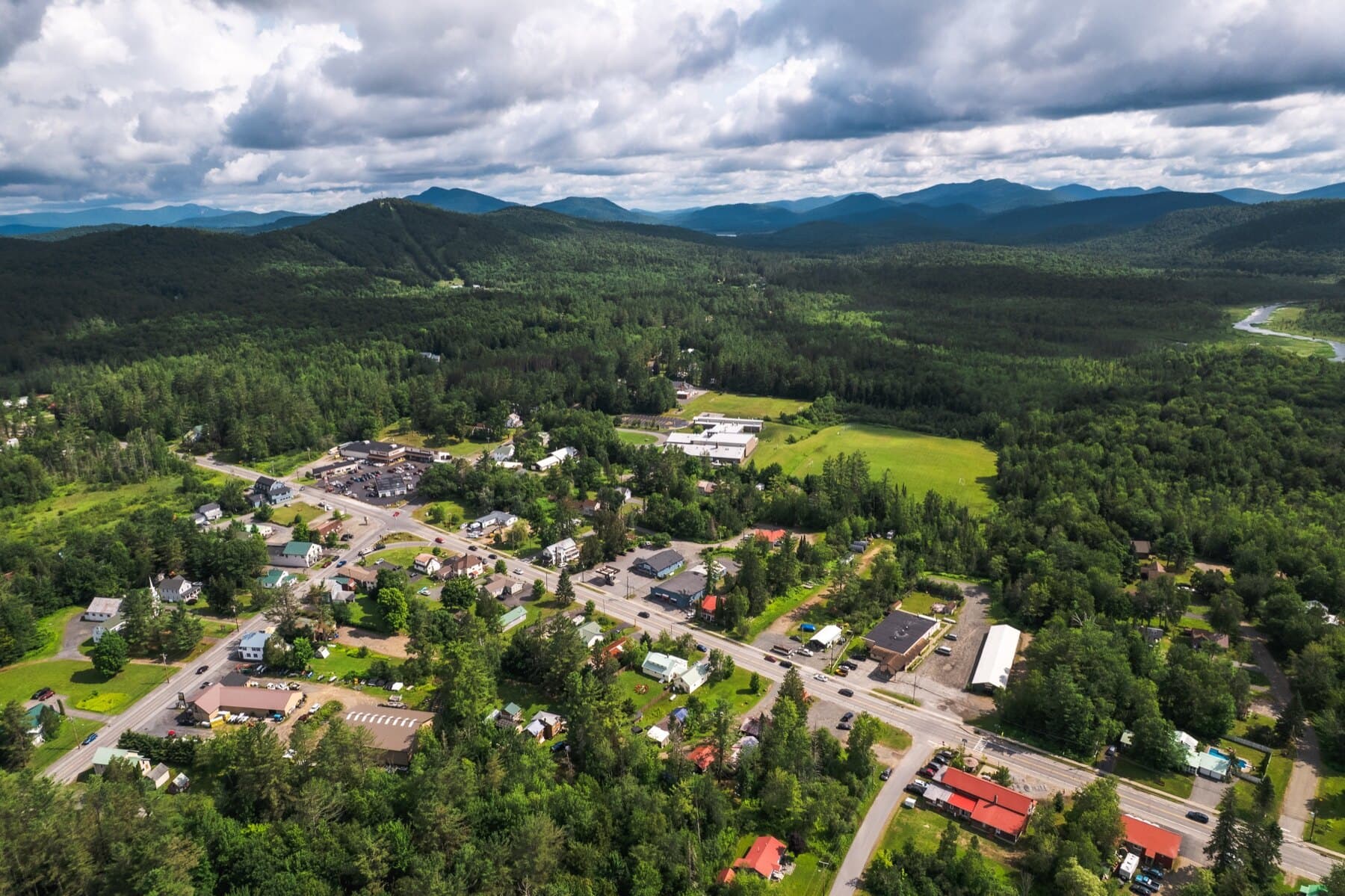
The Adirondack Park is unusual because it is not simply a national-park-style unit of public land. It is a living landscape of state Forest Preserve, private land, villages, roads, working forests, lakes, trailheads, and wilderness areas.

Article XIV Forever Wild constitutional protection
Article XIV · Forever Wild

1894

The words that changed the Park.

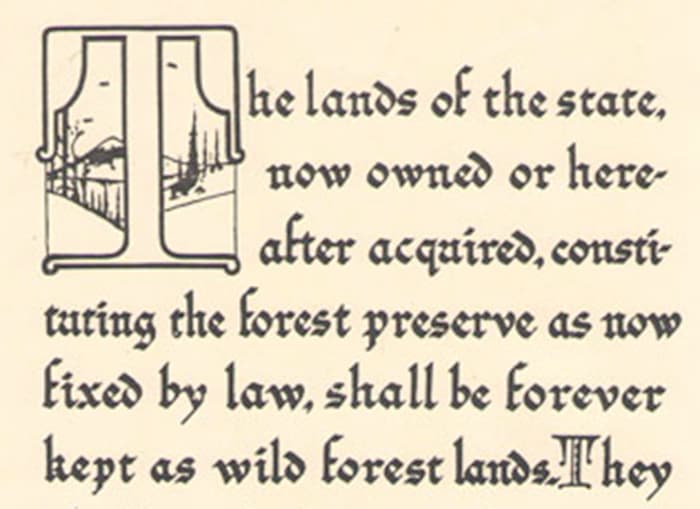
The Forever Wild clause placed the Forest Preserve inside the New York State Constitution. It made protection more than a policy preference. It became a promise.

The clause prevented state Forest Preserve lands from being sold, leased, exchanged, or stripped of timber. That protection is one of the reasons the Adirondacks remain a public wild landscape rather than only a memory of one.

“Shall be forever kept as wild forest lands.”

Article XIV, Section 1
Marshall brothers and Herbert Clark High Peaks history

The High Peaks Become a Quest

The 46 become a journey.

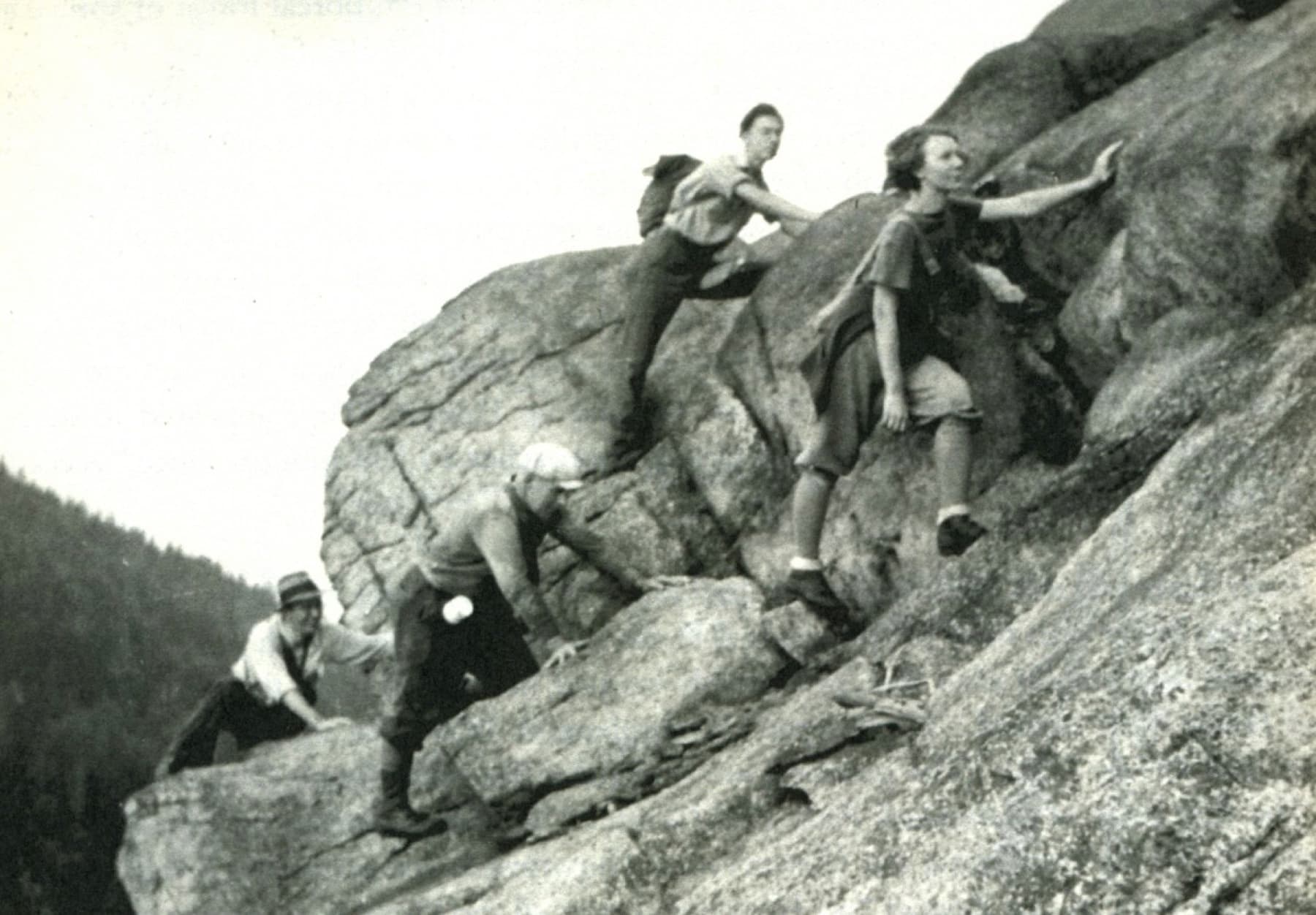
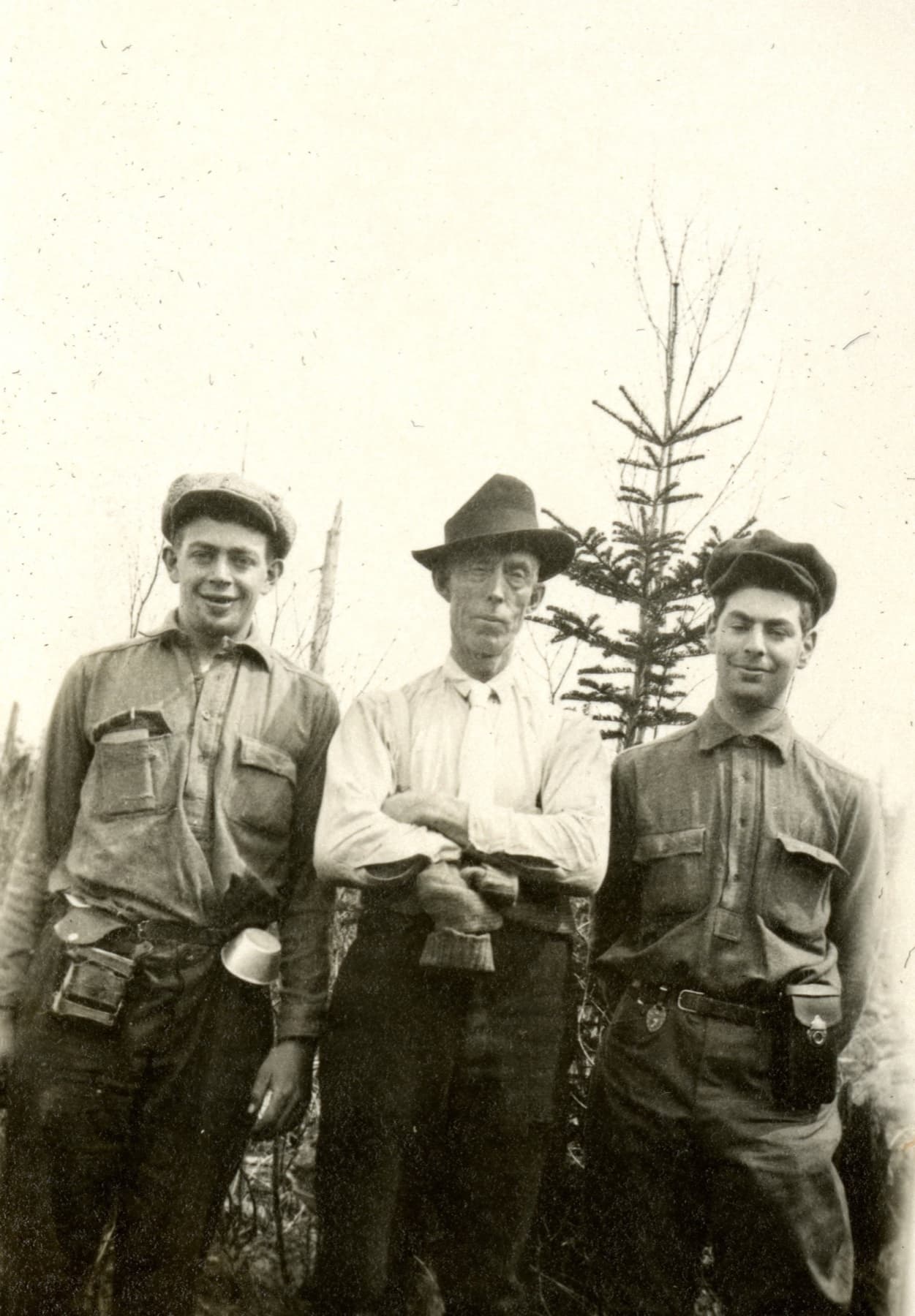
By the early twentieth century, climbing the High Peaks had become more than isolated exploration. Bob Marshall, George Marshall, and Herbert Clark began with a broader idea of climbing Adirondack summits, then narrowed around the peaks believed to rise above 4,000 feet.

In 1925, they completed the original 46 on Mount Emmons. The list they finished was based on the knowledge and measurements available at the time, not the cleaner numbers hikers debate today.

That matters because the 46 are historical as much as mathematical. Some summits later proved lower than 4,000 feet, but the route-finding, effort, and story had already become the foundation of a tradition.

Forty-Sixers and Grace Hudowalski history

A Community Forms

The 46ers turn memory into stewardship.

As more people followed the Marshall and Clark path, the climbs became a shared record rather than a private adventure. In 1936, Edward Hudowalski and Ernest Ryder helped form the early group known as the Troy 46ers.

Grace Hudowalski became central to the culture that followed. She was the first female Adirondack 46er and helped turn summit lists into letters, memories, encouragement, and connection between hikers.

The Adirondack Forty-Sixers were later recognized by New York State in 1948. The legacy is not only completion; at its best, it is memory, humility, conservation, and service to the mountains.

Adirondack Park Agency and land use planning history

Modern Park Planning

The APA brings planning to the whole Park.

The Adirondack Park Agency was created in 1971 to develop long-range land-use plans for both public and private lands inside the Blue Line. That mattered because the Adirondack Park is not only Forest Preserve. It is a living patchwork of wilderness, towns, private land, working lands, roads, lakes, trailheads, and communities.

The APA added a modern planning layer to the Forever Wild inheritance. Its role was to help hold protection, access, private land, and development in tension across one enormous park, so the Adirondacks could remain both lived-in and protected.

Modern Adirondack stewardship and Forever Wild inheritance

Today

The modern inheritance

The Park still asks something of us.

Today's Adirondacks are under pressure from popularity, access strain, regulation, development questions, and the difficulty of welcoming people without losing the wild character that brought them here.

The answer is not to forget access or abandon protection. The inheritance is both: a public wild landscape that remains open enough to be loved and protected enough to stay wild.

The history matters because every generation receives the Park unfinished. What survives depends on whether people remember why it was protected in the first place.