Prepare

Weather & Seasons

Adirondack conditions change fast. Start with the season you are hiking in, then check the actual day before choosing a route.

Daylight

Adirondack daylight

Lake Placid / High Peaks reference.

Daylight remaining: 8h 00m

Sunrise

5:20 AM

Sunset

8:40 PM

Day length

15h 20m

Phase

Daylight

SunriseSunset
5:20 AM8:40 PM

Summit context

Current High PeaksSummit Weather

Mount Marcy NOAA point forecast

Condition

Slight Chance Showers And Thunderstorms

Valid Jul 9, 12:00 PM

Temp

63°F

17°C

Wind

14 mph

23 km/h

W

24h range

64° / 57°

18° / 14°C

Wind chill

Precip

22%

High Peaks region

Elevation 5,344 ft

Current seasonal focus

It's summer in the Adirondacks.

Long daylight opens up more hiking options, but summer still asks for smart planning. Heat, humidity, afternoon storms, insects, mud, exposed ledges, and higher terrain that can be up to about 20°F colder than the trailhead, especially with wind and exposure, can all change the day.

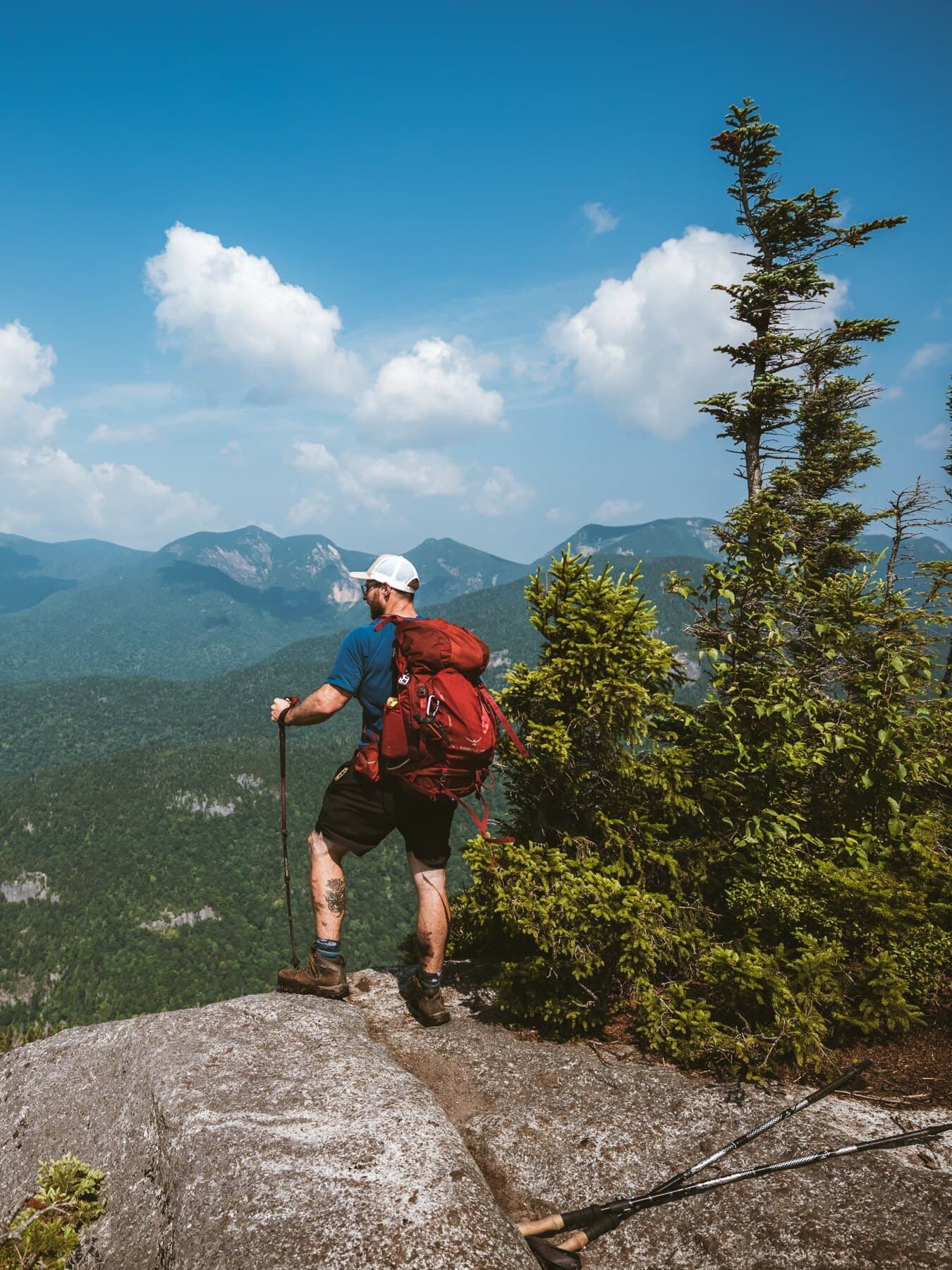
Summer Adirondack hiking conditions

Summer mindset

Start early, watch the sky, and expect cooler high terrain.

Think about the full Adirondack day, not only the forecasted high. A hot trailhead can still lead to a summit, fire tower, ridge, or open ledge that feels up to about 20°F colder, especially with wind, clouds, or storms.

What to expect

Warm trailheads, humid forests, wet rock, insects, crowded access points, and high terrain that can feel up to about 20°F colder.

How to prepare

Bring extra water and electrolytes, sun and bug protection, rain gear, and a light layer for wind, shade, exposed ledges, or summit chill.

Keep in mind

  • Start early enough to avoid peak heat, full parking lots, and late-day storm windows.
  • Expect summits and exposed high terrain to feel up to about 20°F colder than the trailhead.
  • Watch thunderstorm timing before committing to ridges, open ledges, fire towers, or long exposed sections.
  • Turn around early if heat, thunder, dark clouds, slow pace, or wet rock changes the plan.

Season Guide

The rest of the year changes the rules

Summer is only one part of Adirondack hiking. Daylight, temperature, footing, water, and exposure shift quickly through the year.

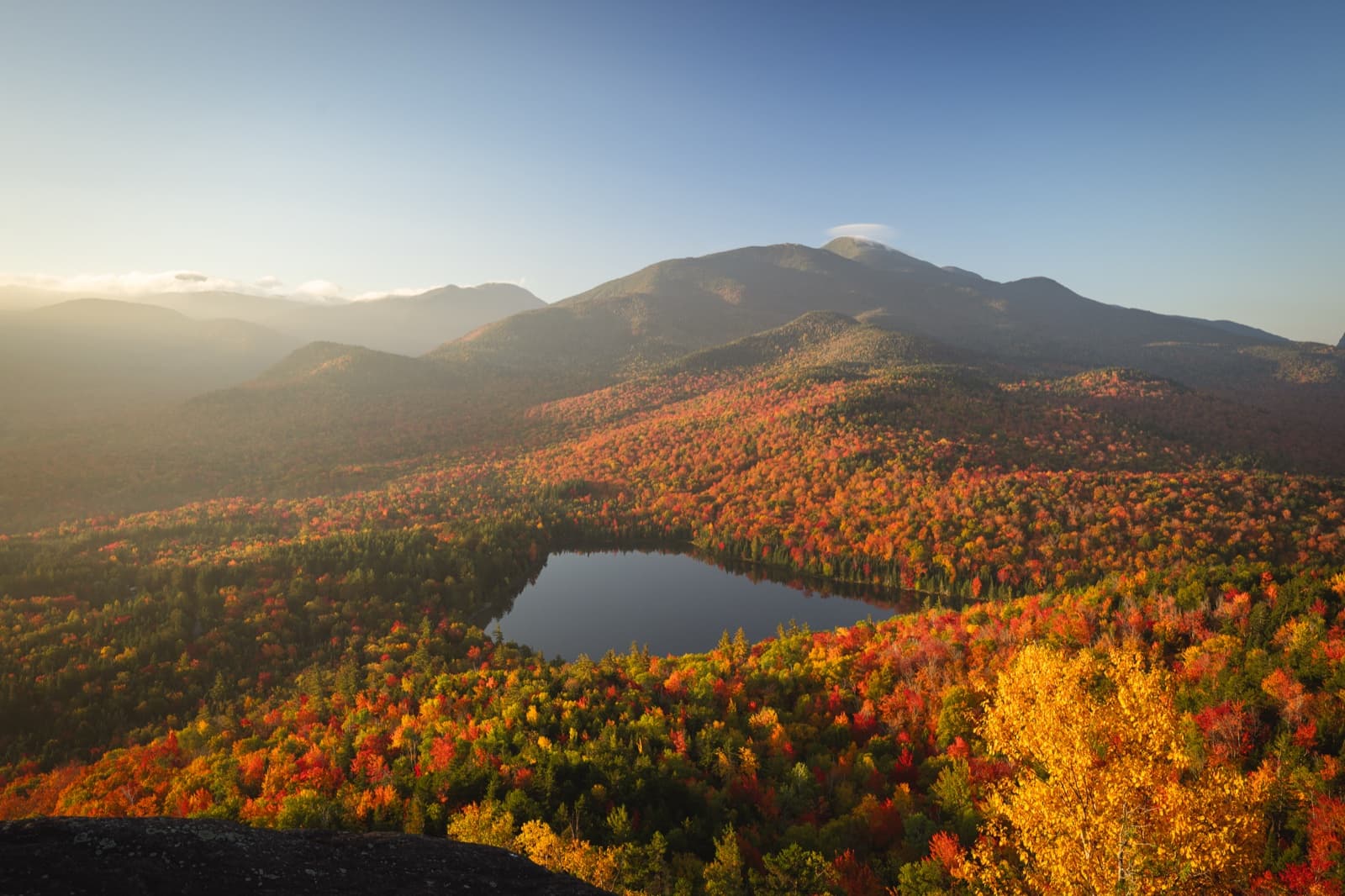
Fall Adirondack hiking conditions

Shortening Days

Fall

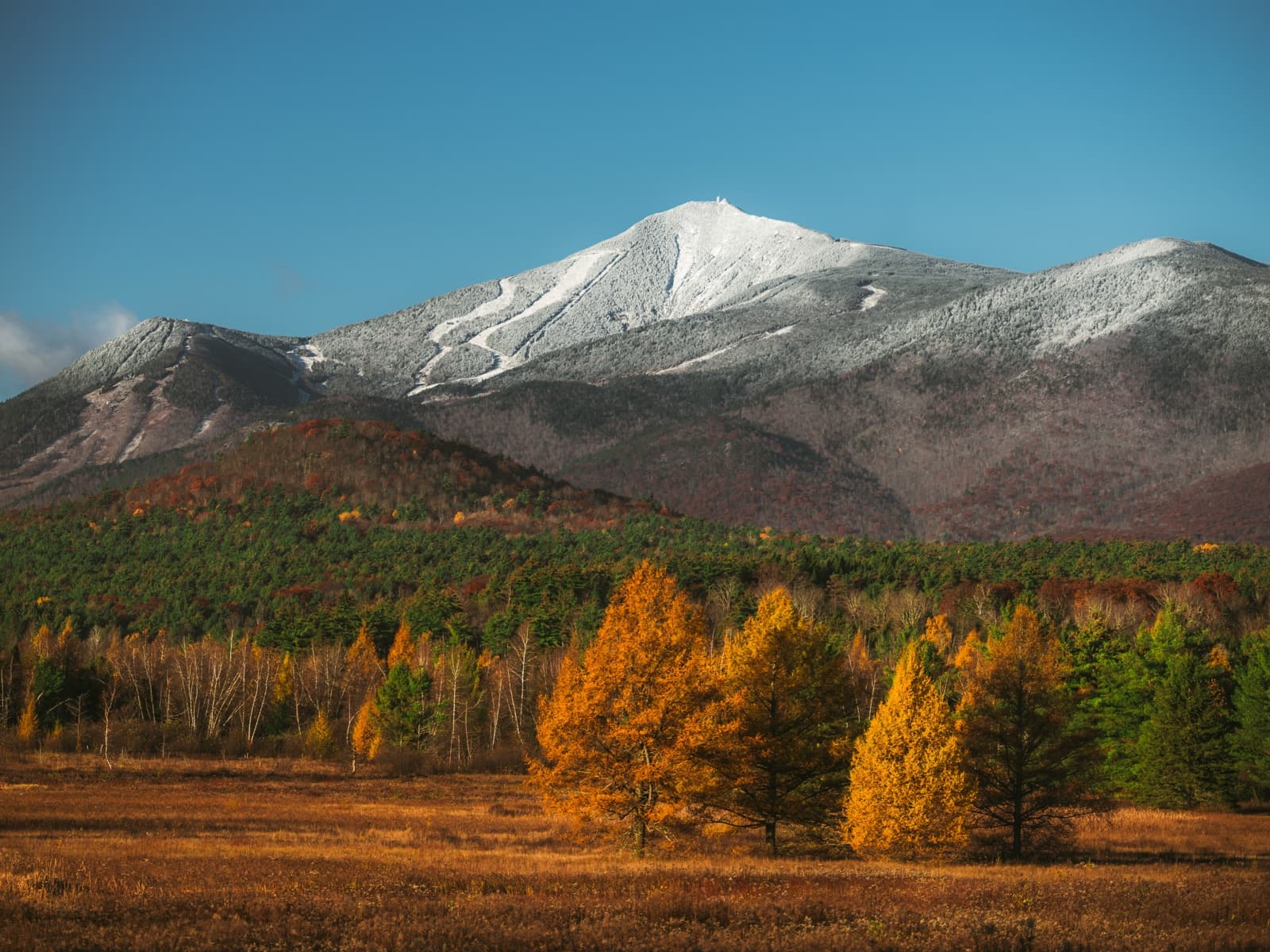
Fall is beautiful but deceptive. Temperatures can drop fast, dry leaves hide footing, daylight shortens, and early ice can appear at elevation before it feels like winter in town.

Fall mindset

  • Track daylight and turnaround time more carefully as the season advances.
  • Expect temperature swings between valleys, shaded trails, open ledges, and summits.
  • Watch footing under leaves, especially on wet rock, roots, and steep descents.
  • Be ready for surprise frost, ice, wind, or cold rain at higher elevations.
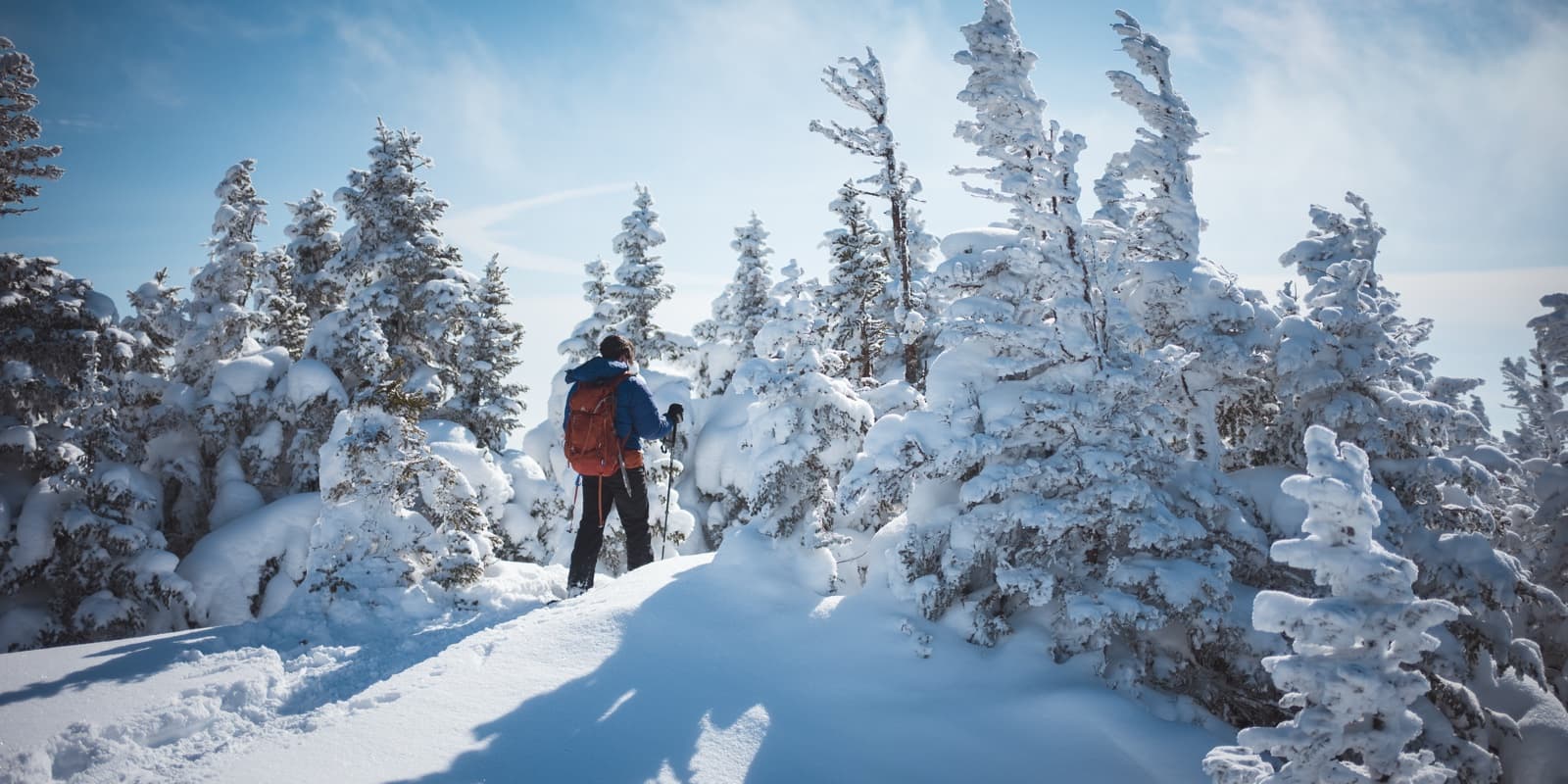
Winter Adirondack hiking conditions

Cold Exposure

Winter

Winter changes the entire margin of error. Snow, wind, ice, deep cold, shorter daylight, slower travel, and exposed terrain make small mistakes more serious.

Winter mindset

  • Start earlier than feels necessary and assume the route will take longer.
  • Carry traction, insulation, backup warmth, headlamp margin, and emergency layers.
  • Treat wind, summit exposure, and wet clothing as major planning variables.
  • Choose objectives that match the group’s winter systems, not just summer fitness.
Spring and mud-season Adirondack hiking conditions

Mixed Hazards

Spring / Mud Season

Spring can combine snowmelt, runoff, deep mud, high water, rotten snow, lingering ice, cold rain, and fragile trail surfaces in the same week.

Spring mindset

  • Expect mixed conditions and avoid assuming the trail has fully dried out.
  • Be cautious with water crossings after rain, thaw cycles, or rapid snowmelt.
  • Carry traction more often than expected when higher elevations still hold ice.
  • Choose durable lower-risk objectives when mud season advisories or fragile trail conditions are active.

Decision System

Conditions decide difficulty

After choosing the seasonal lens, judge the actual day. A hike is not just its mileage and elevation gain.

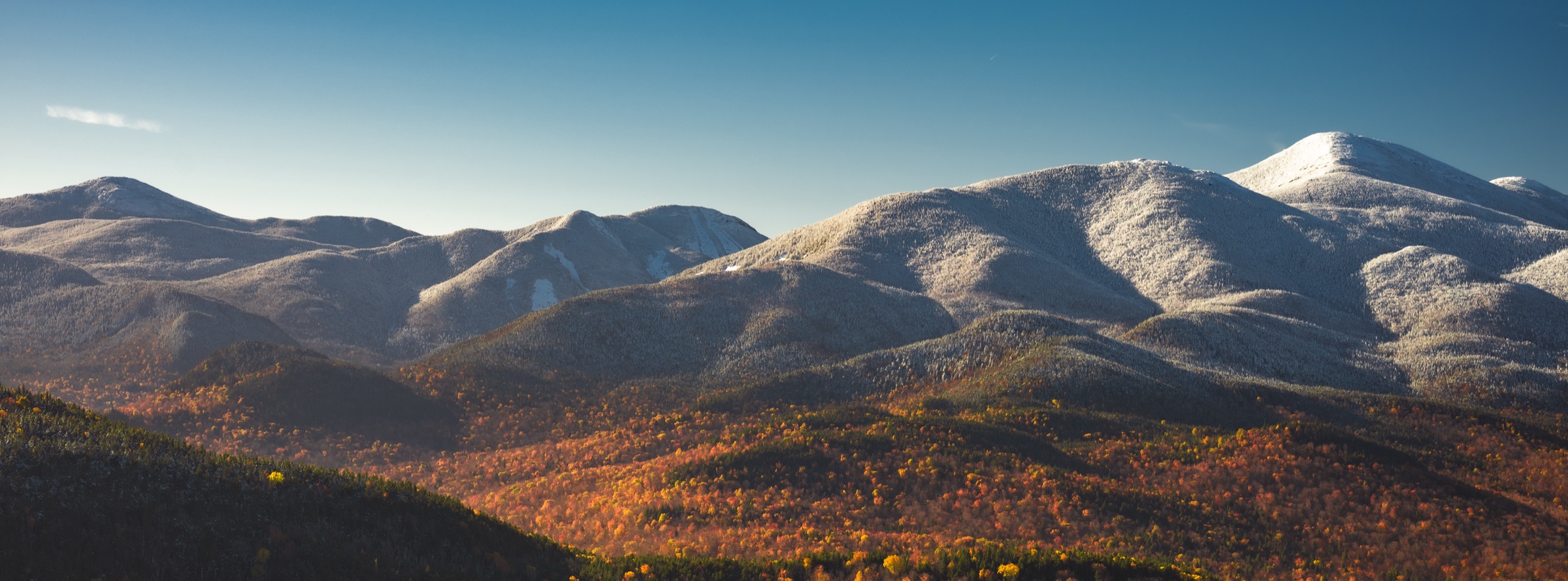
Snowy Adirondack peaks illustrating changing mountain conditions

Decision lens

Think in conditions, not just seasons.

Core idea

The same hike can become a different objective.

Mileage and elevation only describe the route on paper. Weather, wind, water, footing, visibility, daylight, and group pace decide what the hike actually demands that day.

Variable

Weather

Variable

Terrain

Variable

Timing

Adirondack weather realities

Use these practical rules before trusting a simple forecast screenshot or assuming town weather matches the trail.

Reality

Summit conditions are often worse than parking-lot conditions.

Reality

Wind turns mild temperatures into exposure risk quickly.

Reality

Rain plus wind plus fatigue is more serious than rain alone.

Reality

Clouds can erase views, navigation cues, and morale at once.

Reality

A safe day in town can still be a bad day on an exposed ridge.

Reality

Shoulder season can combine mud, flowing water, ice, and cold in one trip.

What to check before every hike

Review these categories before committing to a route, not after the day has already started going sideways.

  1. 1Summit forecast, not just the nearest town forecast.
  2. 2Wind speed and gusts at elevation.
  3. 3Temperature at the highest point of the route.
  4. 4Rain, snow, thunderstorm, and precipitation timing.
  5. 5Overnight lows if starting early or finishing late.
  6. 6Current DEC backcountry notices and seasonal advisories.
  7. 7Sunrise, sunset, and realistic daylight buffer.
  8. 8Water crossing concerns after recent rain or snowmelt.

Reasons to turn around early

Changing the plan early is often the strongest decision. Turn around before a manageable problem becomes harder to control.

Turn around if

Thunderstorms building earlier than expected

Turn around if

Winds stronger than the group can manage

Turn around if

Unplanned ice, deep mud, high water, or rotten snow

Turn around if

Pace falling behind the daylight window

Turn around if

A group member getting cold, depleted, unstable, or uneasy

Turn around if

Poor visibility where route-finding matters

Turn around if

Conditions forcing repeated improvisation

Turn around if

Any decision that depends on “it will probably be fine”

Next step

Use the conditions, then choose the right hike.

After checking weather, trail conditions, and daylight, return to Explore and choose an objective that fits the actual day.

Current High Peak Summit Weather

Mount Marcy

Loading Mount Marcy summit weather.

More weather sources

Cross check mountain forecasts

Use these as secondary planning references alongside the Hike ADK conditions dashboard.

Have an Adirondack hiking question?

Route choice, parking, weather, gear, timing, difficulty, or which hike fits your day. Send us your question and we’ll point you in the right direction.

For emergencies, call 911. Always verify closures, regulations, and current conditions with official sources before heading out.

Ask Us a Hiking Question