
Prepare

Hiking Gear Checklist

The Hike ADK summer field sheet for checking the plan, packing the right gear, and adding margin before the trailhead.

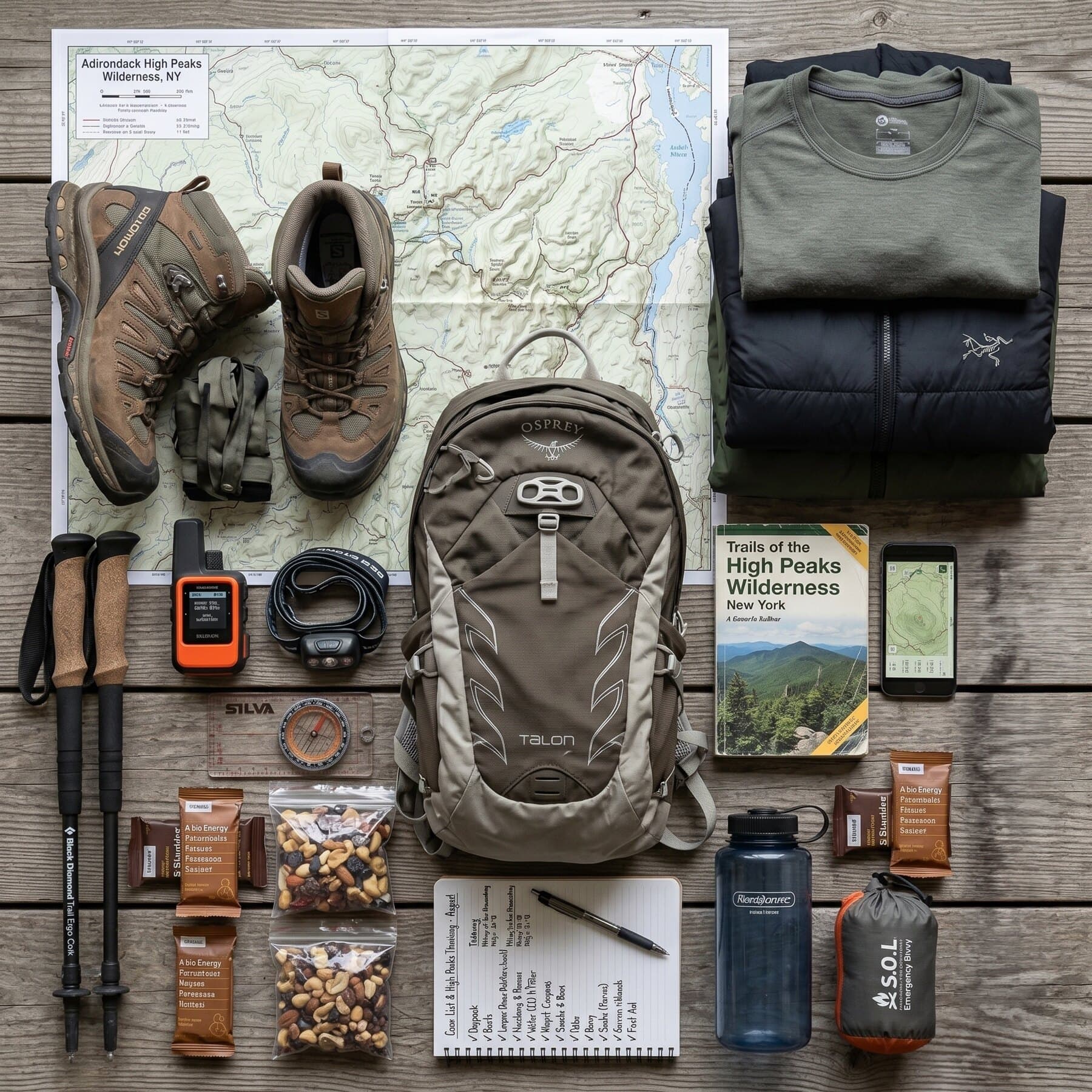
Summer hiking checklist gear layout

Printable version

Summer Hiking Gear Checklist

The official Hike ADK field sheet for summer day hikes: check the plan, pack the core carry, add margin for heat, storms, long routes, and High Peaks days, then fill in the hike snapshot before you leave.

Download printable checklist

Save it to your phone, print it, or keep it with your route notes. It is a planning aid, not permission to force a bad plan.

Summer focus

Built for summer conditions, then scaled up for longer routes, exposed summits, group needs, storms, and overnight trips. Conditions decide difficulty. Judgment decides the hike.

Before you pack

Gear helps, but the first safety decision is choosing the right hike.

Do this check while the plan can still change. A better route choice beats a heavier pack every time.

Field rule

Pack for the hike changing, not just the hike planned.

Checked mountain weather, wind, storms, heat, and summit conditions.

Confirmed trailhead, parking, access rules, reservations, and notices.

Set a turnaround time with daylight for the full descent.

Know your bailout, shorter option, or lower-risk backup.

Know the route, mileage, elevation gain, terrain, and expected time.

Have two forms of navigation and know the major junctions.

Told someone your route, group, vehicle, and return time.

Matched the objective to the slowest, least experienced person.

What is inside

The checklist is built like a field sheet, not a shopping list.

Start with the core carry, add the secondary items that keep small problems from getting bigger, then add margin for summer heat, storms, long miles, and remote terrain.

1

Core carry

The basics that should be visible in almost every summer day pack.

  • Backpack
  • Enough water: 1 L / 5 miles as a baseline, more in heat
  • Food plus extra food
  • Headlamp and extra batteries
  • Map and offline route
  • Charged phone
  • Sturdy hiking footwear: trail runners or hiking boots
  • Non-cotton layers
  • First aid basics
  • Personal medications or critical medical items

Never use a phone as your primary navigation tool. Always have a map and know exactly where you are going.

2

Secondary but necessary

Not every item gets used every hike. The point is to have it before weather, injury, delay, or darkness changes the day.

  • Rain shell
  • Extra warm layer
  • Water filter or treatment
  • Compass
  • Power bank
  • Emergency blanket or bivy
  • Whistle
  • Knife or multi-tool
  • Lighter or fire starter
  • Sunscreen
  • Bug net or bug protection
  • Pack-out bag for trash and waste
  • Toilet paper, toilet kit, and sanitizer

Pack for the hike changing, not just the hike planned.

3

Summer conditions

Add or emphasize these when heat, humidity, insects, exposed summits, or storms are likely.

  • Extra water capacity
  • Electrolytes or salty snacks
  • Hat or sunglasses
  • Bug net or repellent
  • Dry socks
  • Light gloves or hat for wind
  • Bandana or cooling cloth
  • Check for ticks
4

Long, remote, or High Peaks days

If the route is long, steep, exposed, remote, or hard to exit, add margin instead of packing the bare minimum.

  • Map and compass
  • GPS / SOS device
  • Bivy or emergency shelter
  • First aid kit with blister care, wrap, tape, and pain relief
  • Trekking poles
  • Reliable water treatment
  • More calories than planned
  • Extra insulation
  • Extra socks
  • Written route notes and bailout points

Gear quality matters

Build the kit over time. Do not buy the cheapest gear just to get by.

Reliable outdoor gear costs more, but good gear is worth the investment.

Avoid casual street sneakers on rocky, muddy, or steep Adirondack trails.

A summer day hike still needs navigation, rain protection, water, food, light, and first aid.

If camping overnight

Know your gear. This is not a full backpacking checklist. Add shelter, sleep system, stove, food storage, extra layers, and a legal plan for where you will sleep. Rules can differ by Wild Forest and Wilderness area, and some places require a bear canister or specific food-storage method.

Final trailhead check

Sign in where registers exist. Do one last pack check before the car is locked. Keep water and headlamp reachable, secure valuables, and start with a real turnaround plan.

Today's hike plan snapshot

Fill this in before you leave.

Download PDF

Destination / route

Trailhead

Start time

Turnaround time

Expected return

Contact notified

Backup plan or bailout point

Weather concern

Hike ADK uses this checklist as a planning aid. Conditions decide difficulty. Judgment decides the hike.

Next step

Pack the checklist, then match the hike to the day.

Gear is only one part of preparation. Check weather, trail conditions, route difficulty, daylight, and group ability before committing to the objective.

Have an Adirondack hiking question?

Route choice, parking, weather, gear, timing, difficulty, or which hike fits your day. Send us your question and we’ll point you in the right direction.

For emergencies, call 911. Always verify closures, regulations, and current conditions with official sources before heading out.

Ask Us a Hiking Question