
Field Guide
How the Adirondacks Got Their Shape
Ice, Stone, and Time
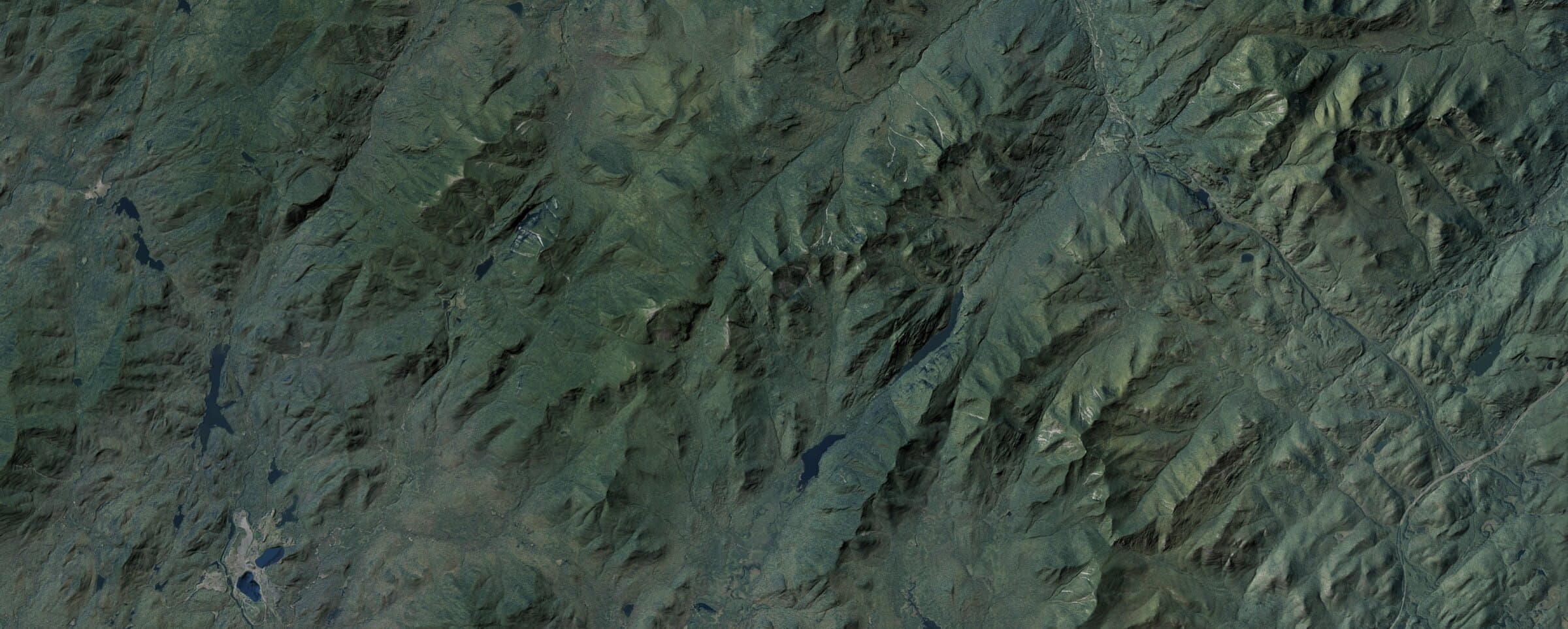
A hiker’s guide to the geology you can actually notice on trail: old bedrock, glacial ice, pond basins, forest return, and the slide scars still cutting through the High Peaks.
Chapter 1
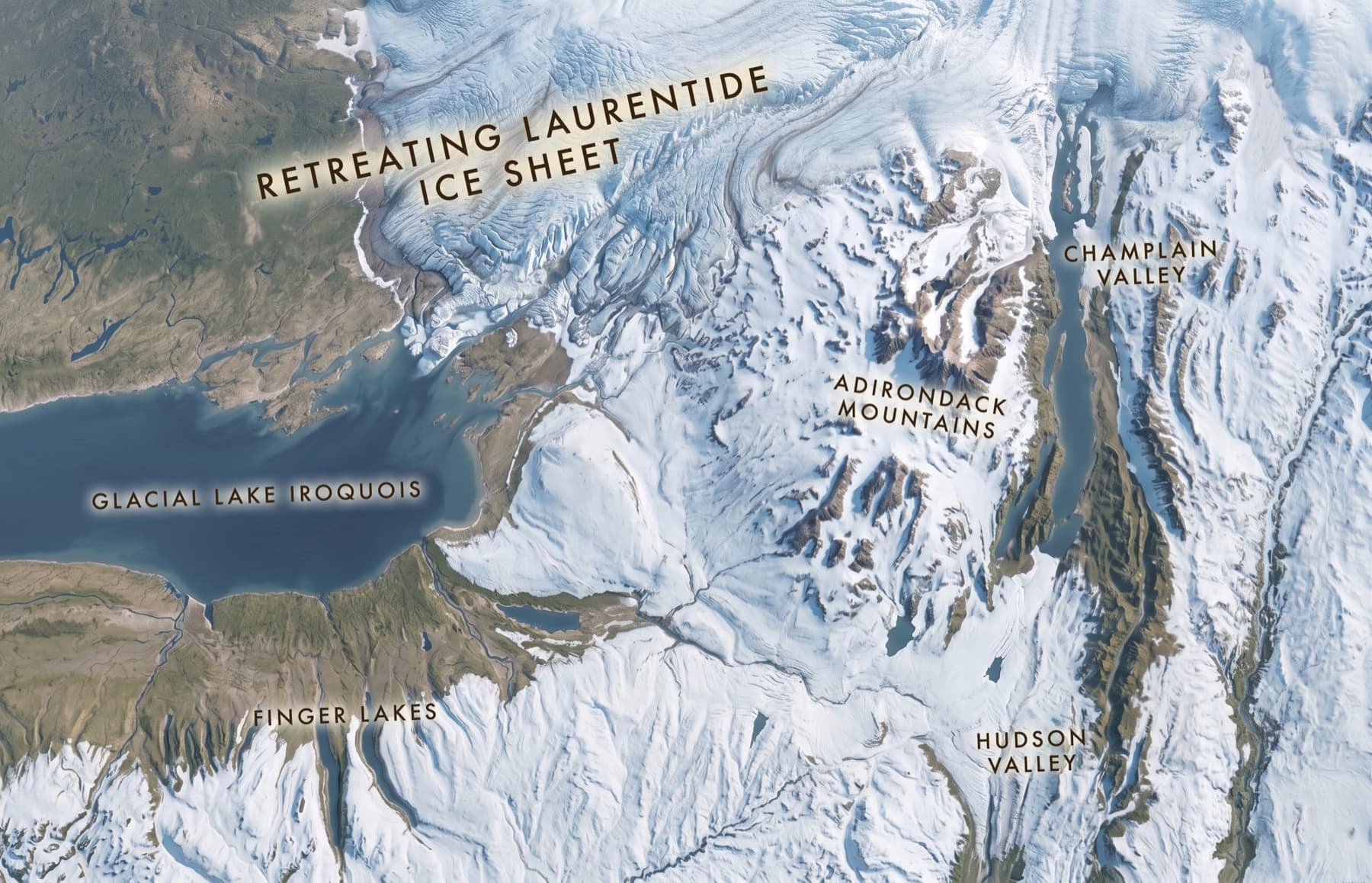
Ice changed almost everything.
One of the biggest forces in the Adirondack story was glacial ice. A massive ice sheet covered this region, pressed down on the surface, scraped exposed rock, and moved loose material around the Park.
The glacier did not create the bedrock itself, but it changed the surface in a major way. Valleys, open ledges, ponds, basins, and the rough feel of the High Peaks make more sense when ice is part of the story.
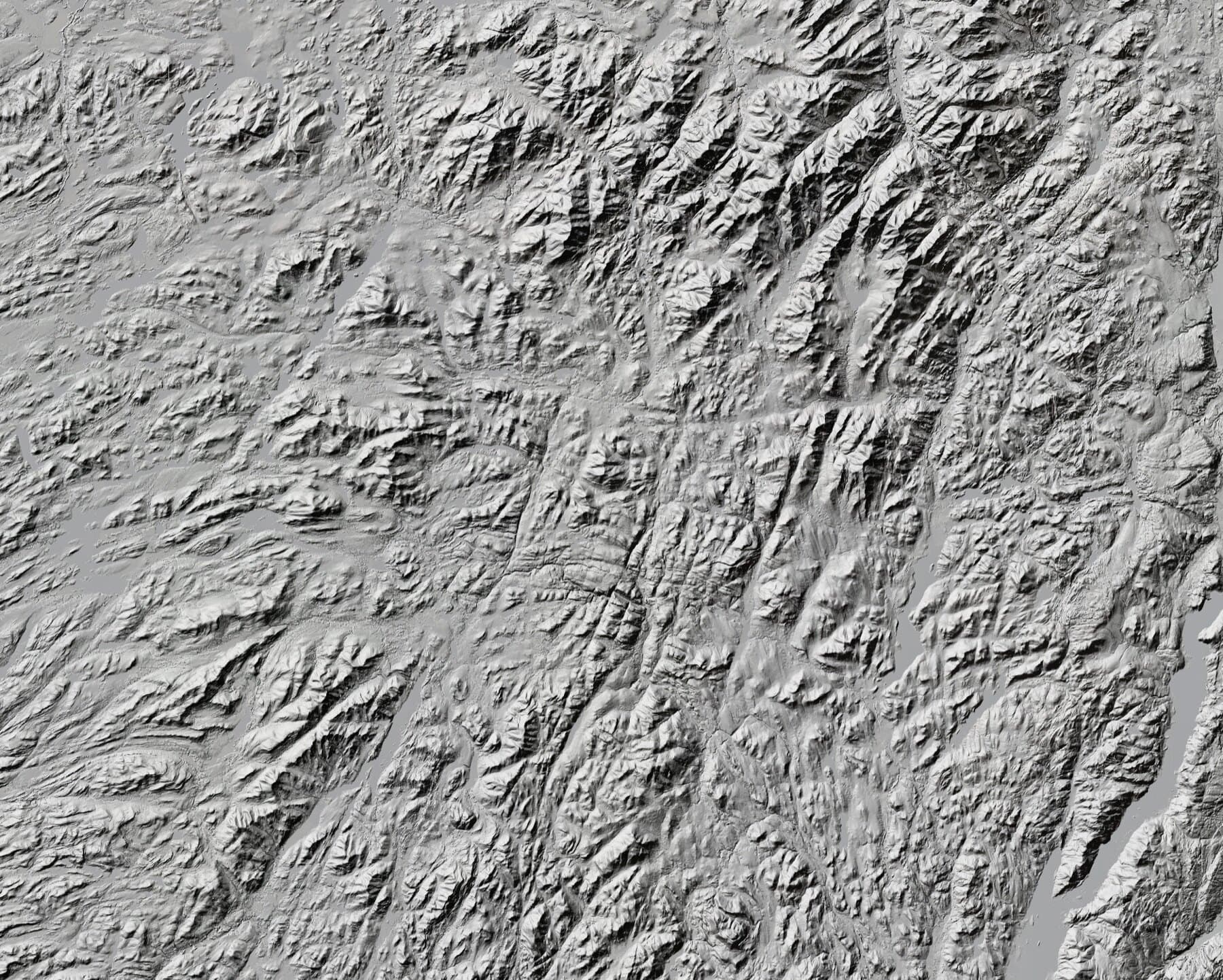
 Modern Adirondack mountain view used as the reference image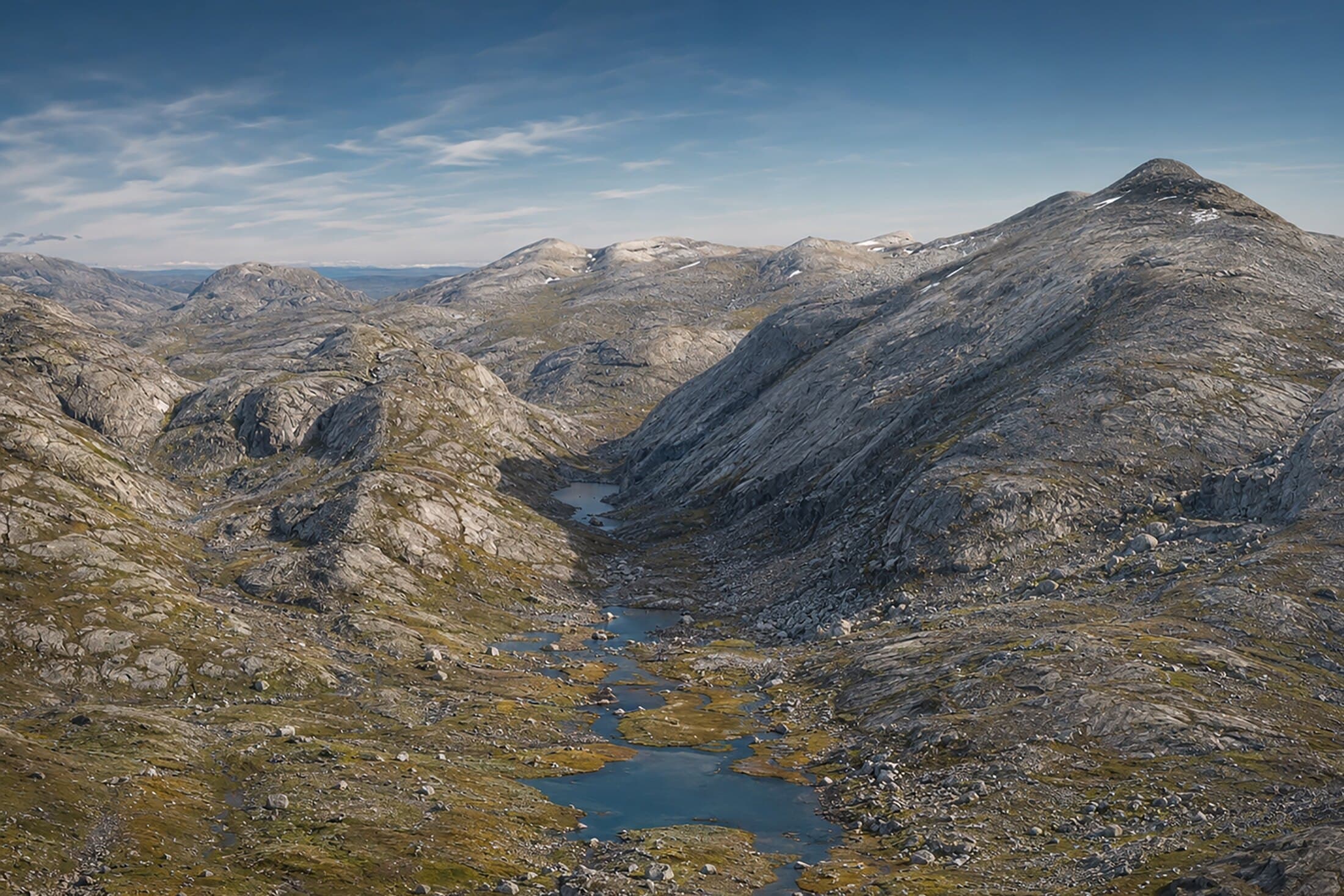
Chapter 2
After the ice left.
When the ice pulled back, the Adirondacks would not have looked like the green Park we know now. It was colder, rougher, wetter, and much more exposed.
There would have been bare rock, loose sediment, meltwater, thin soils, and early plant life trying to take hold. The forest came later.
Chapter 3
The Adirondack Dome.
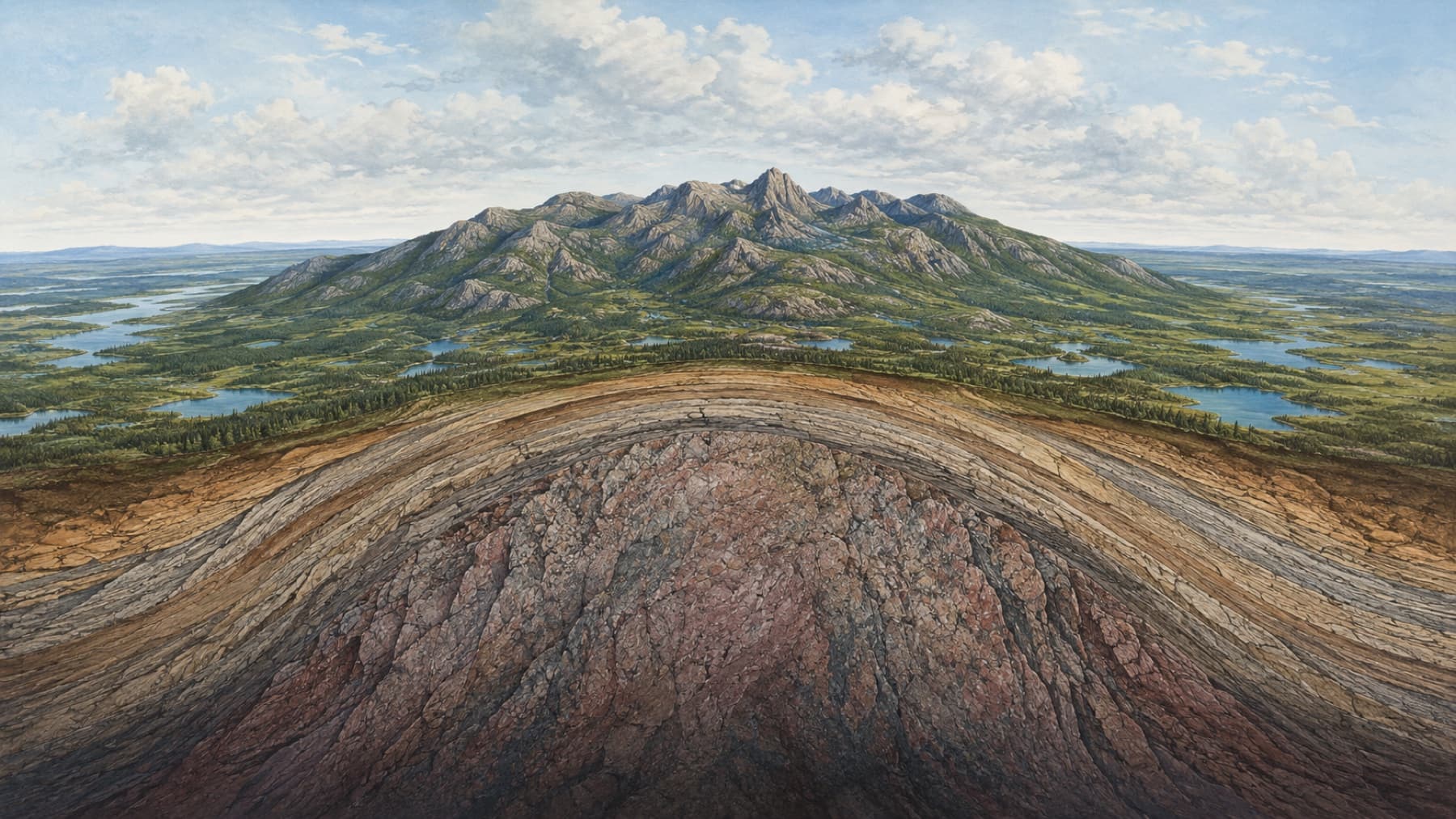
The Adirondacks are not just a long folded mountain chain. A better way to picture them is as a broad dome, slowly lifted upward while water and weather kept cutting into it.
That old Canadian Shield connection helps explain why so much hard, ancient rock is exposed here.
The High Peaks are part of that bigger pattern. The land rose, erosion worked against it, and the tougher forms remained as the mountains hikers know today.
Chapter 4
Why the High Peaks look the way they do.
There is no single reason the High Peaks look the way they do. Old bedrock, uplift, glacial ice, meltwater, storms, freeze-thaw, and gravity all had a role in shaping the rounded summits, steep valleys, exposed ledges, and sharp relief in the heart of the Park.
Rounded summits
A lot of Adirondack summits have that worn, rounded look because ice, weather, and erosion have been working on them for a long time.
Steep valleys
Ice and meltwater deepened low places and made the gaps, basins, and mountain walls feel more dramatic.
Slides and exposed rock
Bare ledges, steep slabs, and slide tracks are reminders that the mountains are still changing.
Chapter 5
The boulders left in the woods.
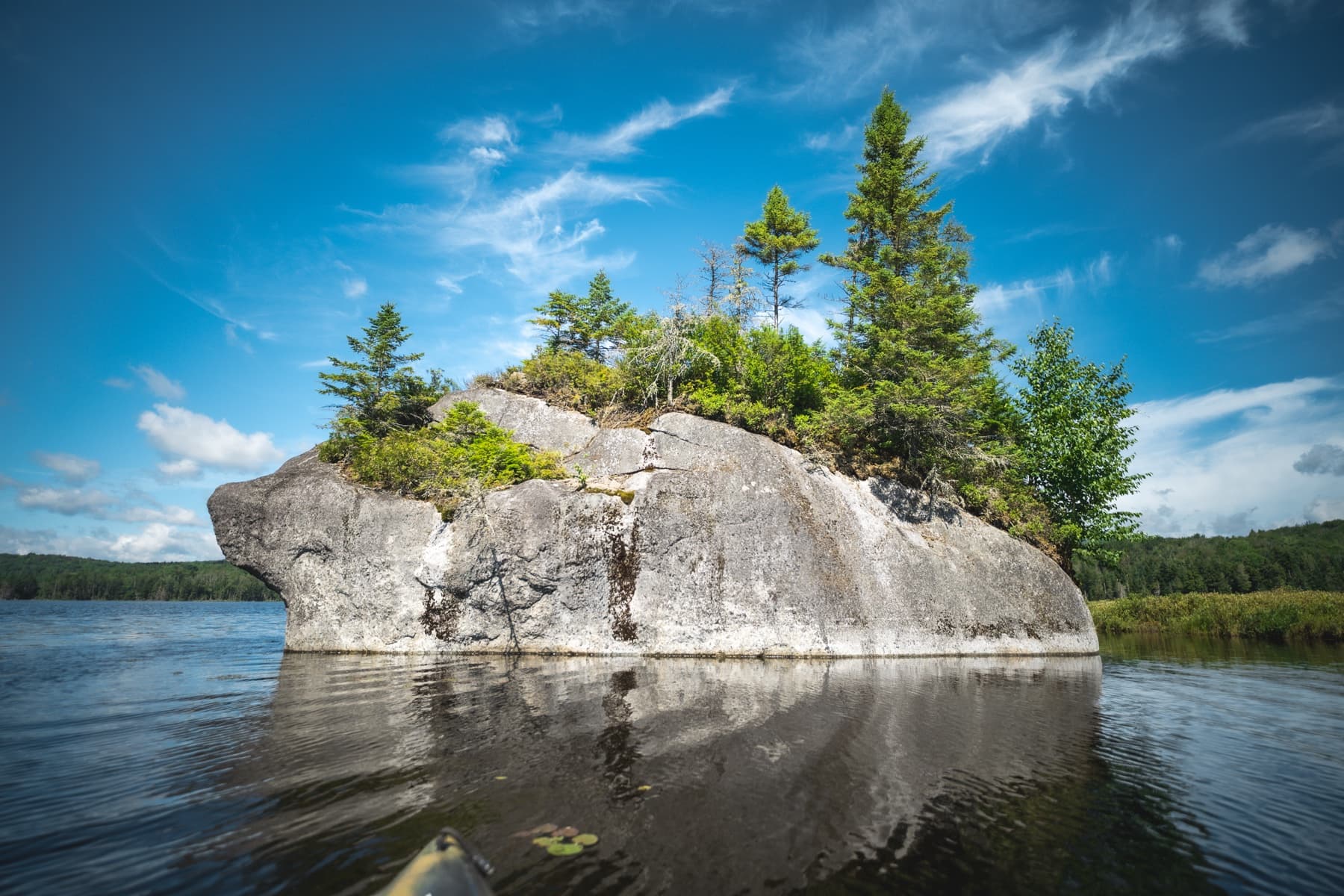
Some of the huge rocks sitting by themselves in Adirondack forests are glacial erratics. Ice picked them up, carried them, and dropped them somewhere else.
That is why they can look out of place. When you pass one on trail, you may be looking at a rock that traveled farther than you did that day.
Chapter 6
Ponds, basins, and water-shaped ground.
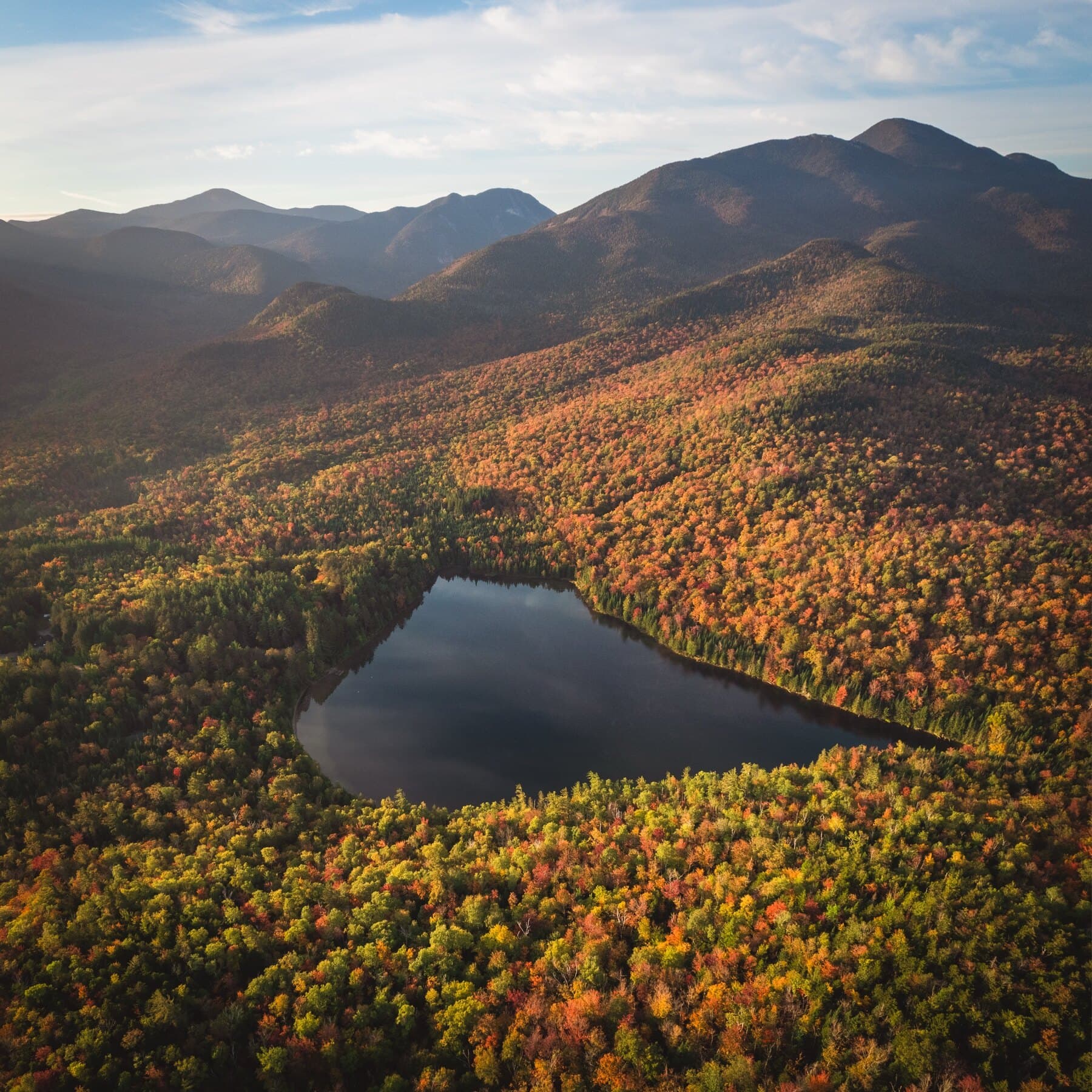
Kettle holes are another leftover from glacial retreat. Buried ice melted and left low places behind. Some of those low places filled with water and became ponds or small lakes.
Around the Adirondacks, places like Heart Lake, Round Pond, Lake Arnold, and Lake Tear of the Clouds help show that ice shaped more than the big summits. It also shaped the quieter water-filled spaces between them.
Chapter 7
From bare ground to forest.
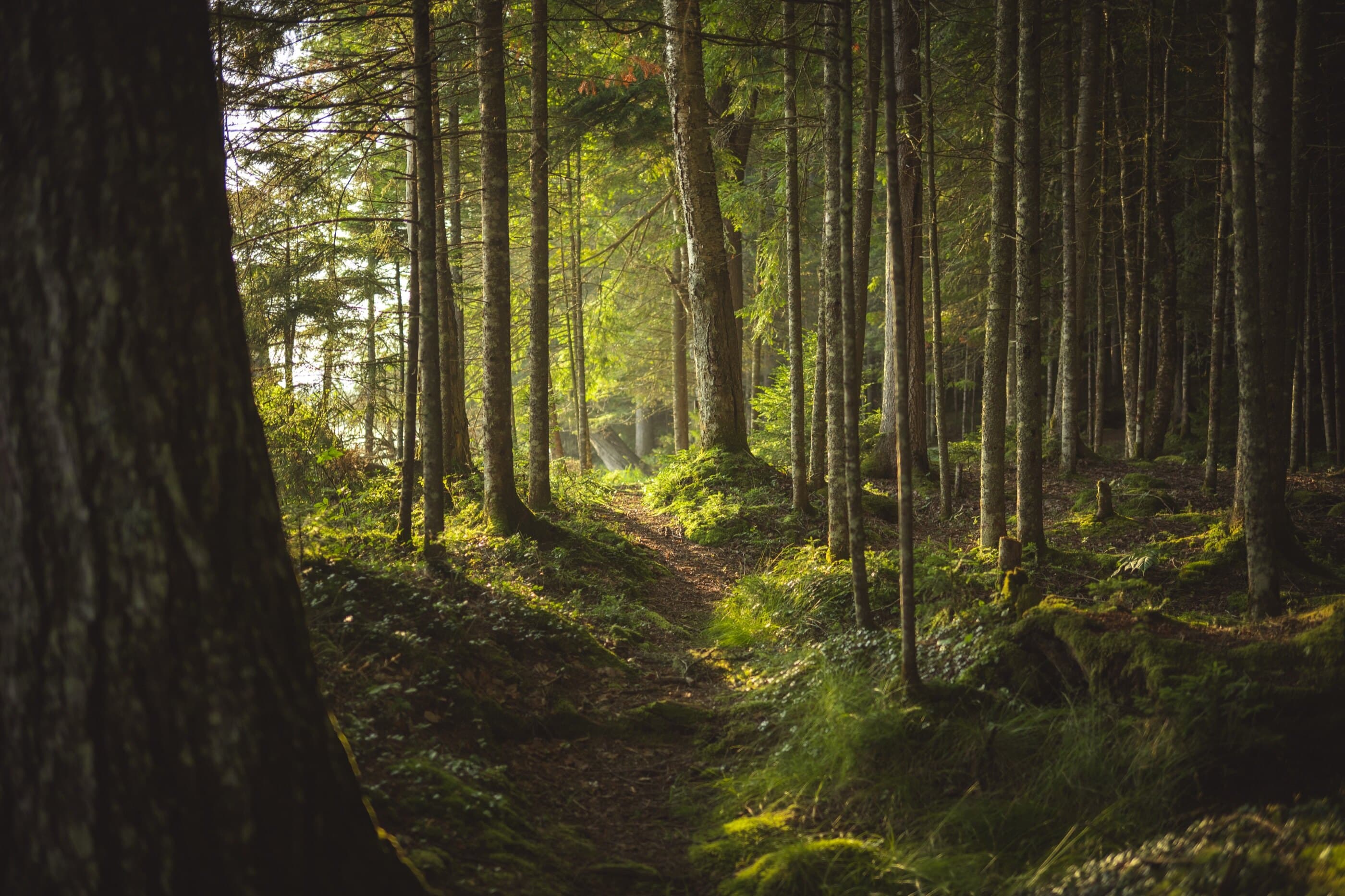
After the ice left, much of the exposed ground likely supported cold, open, tundra-like vegetation before true forests returned. As soils built up and conditions warmed, boreal forest spread across the region.
Today the Park holds a mix of boreal and temperate forest. The small alpine zones on the highest summits are a living reminder of colder conditions that once covered far more ground.
Kettle Hole Ponds
Boreal Forests
Alpine Vegetation
Cold-Climate Legacy
Chapter 8
The slides are part of the mountain.
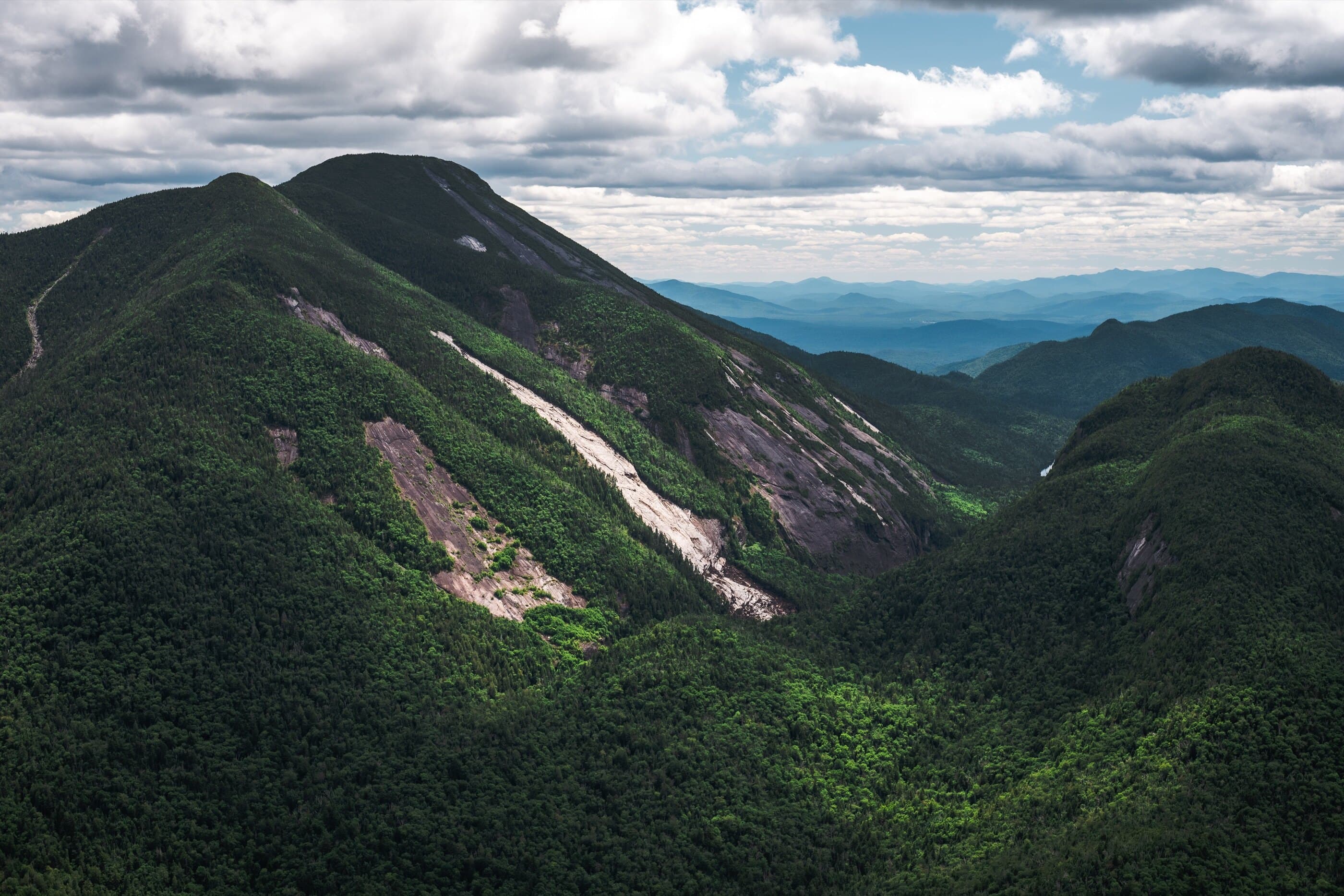
When you look across the High Peaks, the pale scars on the mountainsides are not just dramatic scenery. They show that the Adirondacks are still moving, breaking, and adjusting.
On steep terrain, the soil can be surprisingly thin. When it gets saturated, loosened by frost, or damaged by storms, whole sections can let go and move downhill. What remains is exposed rock, rubble, broken trees, and a slide track that can stay visible for generations.
Colden, Gothics, Dix, Macomb, and Giant all show this clearly. Their slides are part of how we picture the High Peaks now: scarred, rugged, raw, and still being shaped in plain view.
Look closer
The mountains are not finished.
Geology is not only something that happened long ago. You can see it when a trail crosses open rock, skirts a pond basin, passes a boulder left by ice, or looks across a slide scar.
The Adirondacks feel ancient because the bedrock is old. They also feel alive because water, freeze-thaw, gravity, storms, thin soil, and forest return are still doing work. Once you start noticing those patterns, a hike becomes more than scenery. It becomes a way to read the Park.
Look closer. Hike deeper.
Every trail crosses more than one layer of time.
The same forces that shaped the Park are still at work under your feet.