
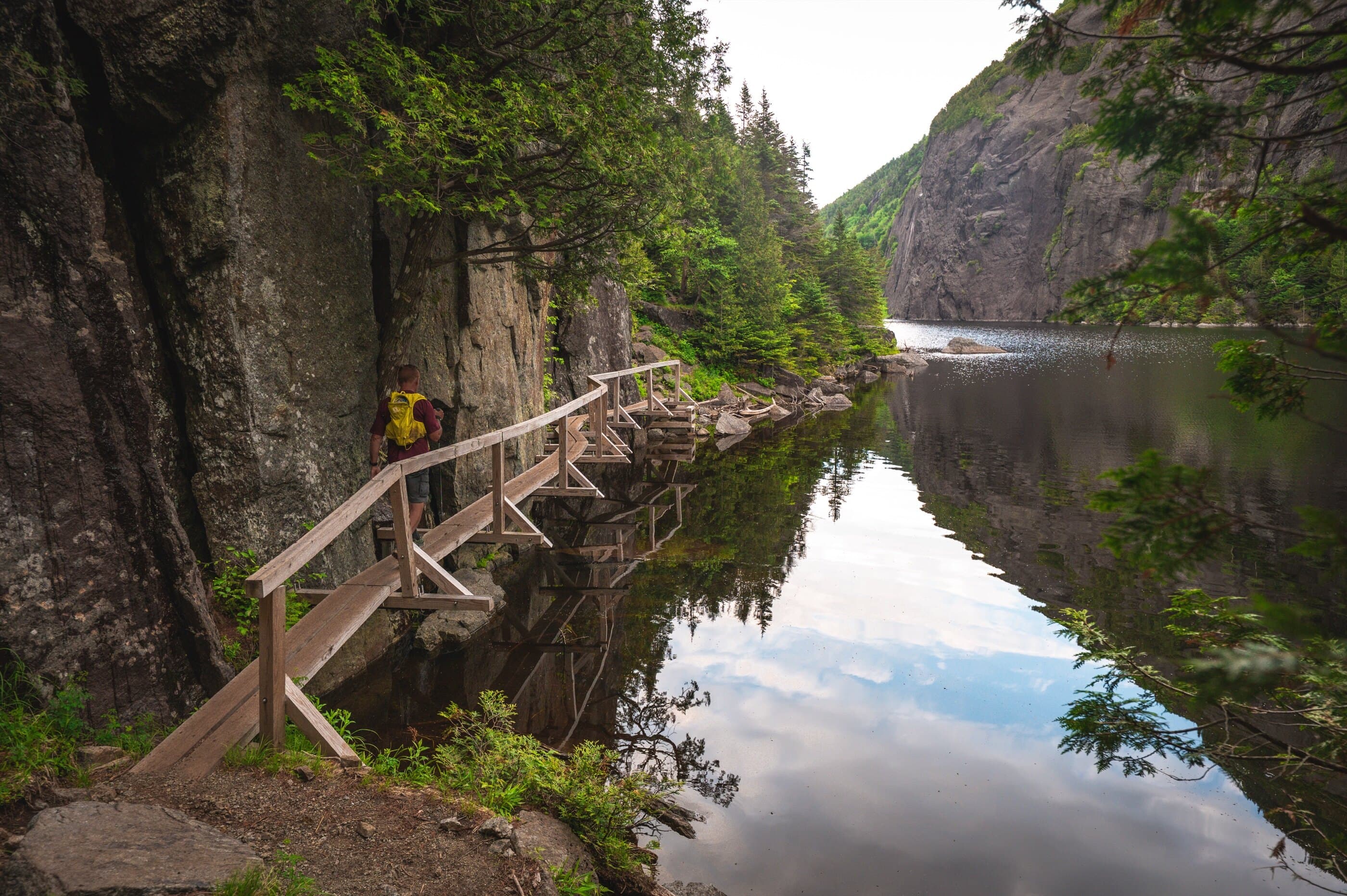

Avalanche Pass
High Peaks Wilderness • High Peaks Region
Avalanche Pass is a High Peaks corridor destination whose public route guidance remains tied to current DEC trail status.
Photo Gallery
Have photos of this hike?
Route closure
Avalanche Pass Trail closed
DEC currently lists the Avalanche Pass Trail as closed and impassable due to mud/rock slides. Impacted travel includes passage south to Lake Colden from the Adirondack Loj and loop routes over Algonquin, Colden, and Marcy through Avalanche Pass. A 2026 DEC work plan describes trail reconstruction, drainage, bridge, bog-bridging, and reroute work. Verify official reopening before planning travel through this corridor.
NYSDEC Backcountry Information / ENB Work Plan
Destination map
Avalanche Pass
Map note
This map marks the hiking objective itself.
Route files
Route lines and GPX downloads are available only for selected launch routes. Most destination maps will remain objective-only until a later version.
Route Guidance
Trail Overview
Avalanche Pass is a non-summit corridor destination between the Adirondack Loj side of the High Peaks and the Lake Colden basin. Because this corridor can be affected by closures, slides, bridge damage, ice, flooding, and reconstruction work, public route guidance remains tied to current DEC backcountry information. Do not plan travel through the corridor unless current official sources show it is open and passable.
Approach
From the Adirondack Loj side, the corridor approach follows the High Peaks interior toward Avalanche Pass and Avalanche Lake, but current conditions should determine whether this route is appropriate or open.
Destination Type
This is a pass and travel corridor rather than a summit objective, so the guide focuses on access, terrain, and current status.
Current Conditions
Check current DEC backcountry information before planning travel through Avalanche Pass.
Access
Use official DEC backcountry information for current closure and route status before planning travel through the corridor.
Seasonal Notes
Winter, high water, ice, bridge damage, and debris can all affect corridor travel even after reopening.
Cautions
Current route status must be checked against DEC before planning travel through this corridor.